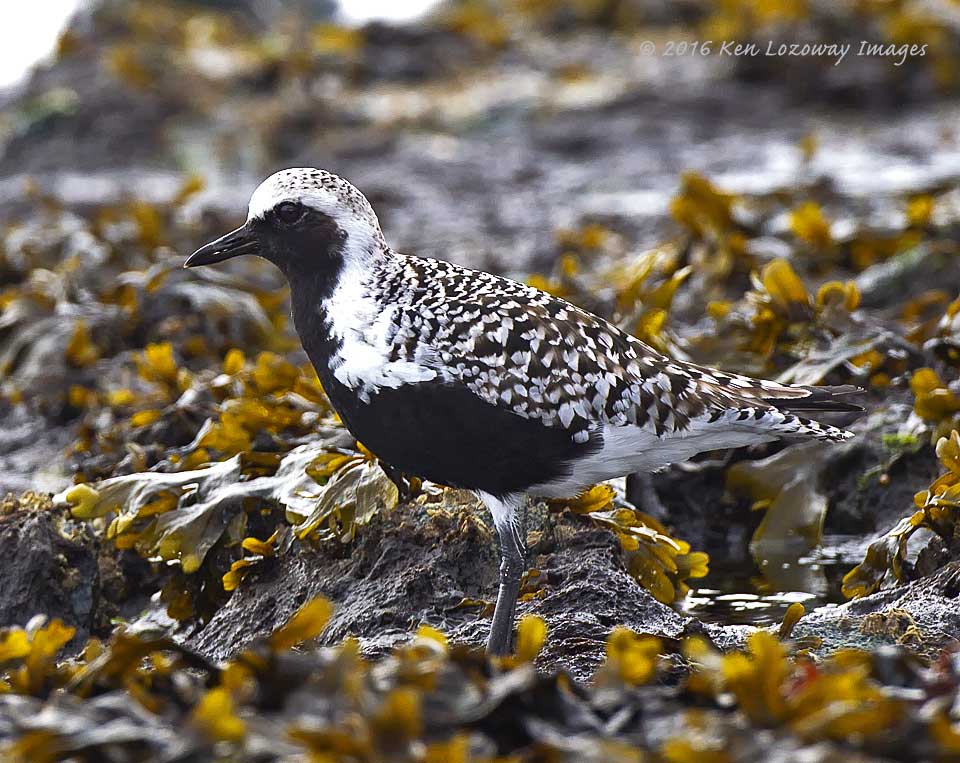
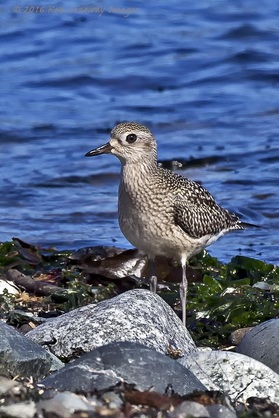
A medium-sized shorebird of coastal beaches, the Black-bellied Plover is striking in its black-and-white breeding plumage. It is 10-13 inches in length with a wingspan of 24 inches. It has long legs, a short, pointed black bill, a round head and, a white wing stripe that is visible when it is in flight. It is the only American plover with a hind toe on its foot. Its wings extend beyond its tail when they are folded. It has a brown, black, and gray back; a white rump and belly; and a grayish-brown breast. During breeding season, its breast, face, throat, and belly are black, and it has a white stripe running from its forehead down the back and sides of its neck. Males and females look similar, but the male is more brightly colored.
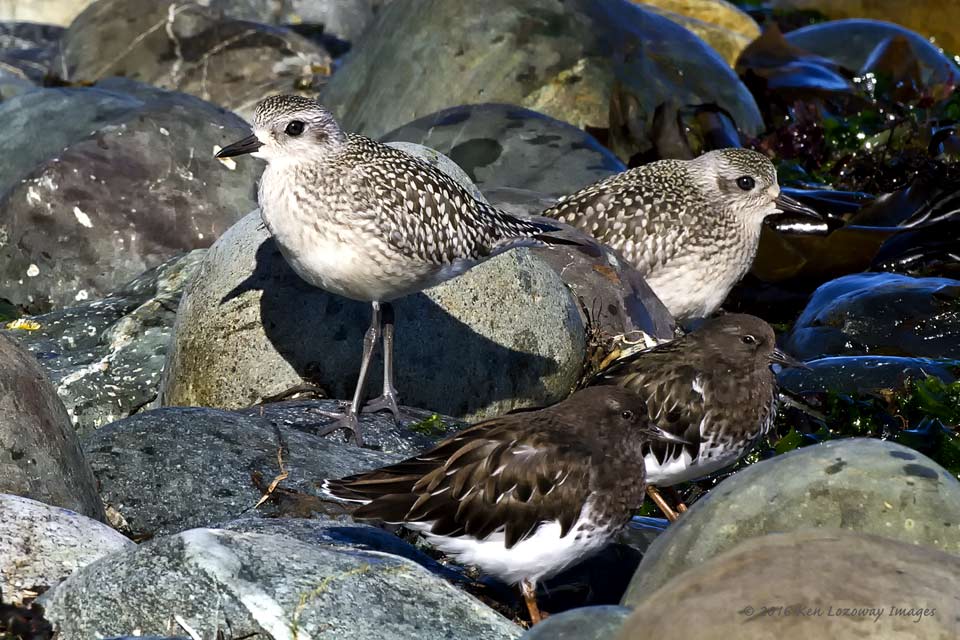
I first encountered this particular shorebird in the fall of 2015 while photographing Black Turnstones and Dunlin at Whiffen Spit near Sooke, BC. The Plovers were foraging for invertebrates in flotsam deposited along a rocky intertidal shoreline, and didn’t seem to mind intermingling with the other two species.
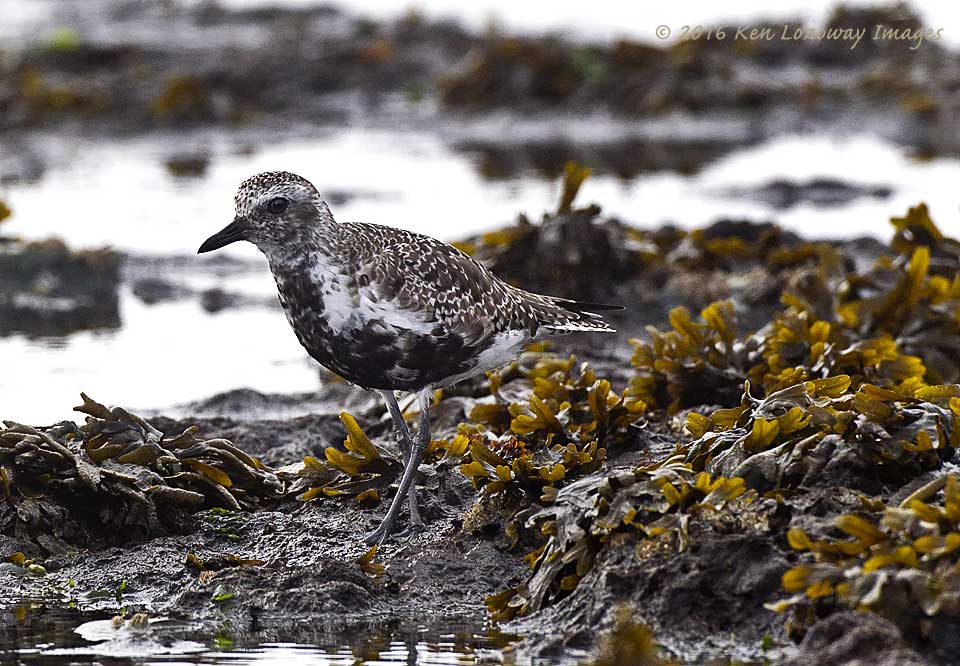
Since that first encounter I’ve been determined to observe and photograph this bird in its very distinctive black and white breeding plumage. Non-breeding condition plumage is rather dull and includes diffused streaks to the upper breast, whitish under-parts and white-edged dark-centered brownish feathers on the back.
Since that first encounter I’ve been determined to observe and photograph this bird in its very distinctive black and white breeding plumage. Non-breeding condition plumage is rather dull and includes diffused streaks to the upper breast, whitish under-parts and white-edged dark-centered brownish feathers on the back.
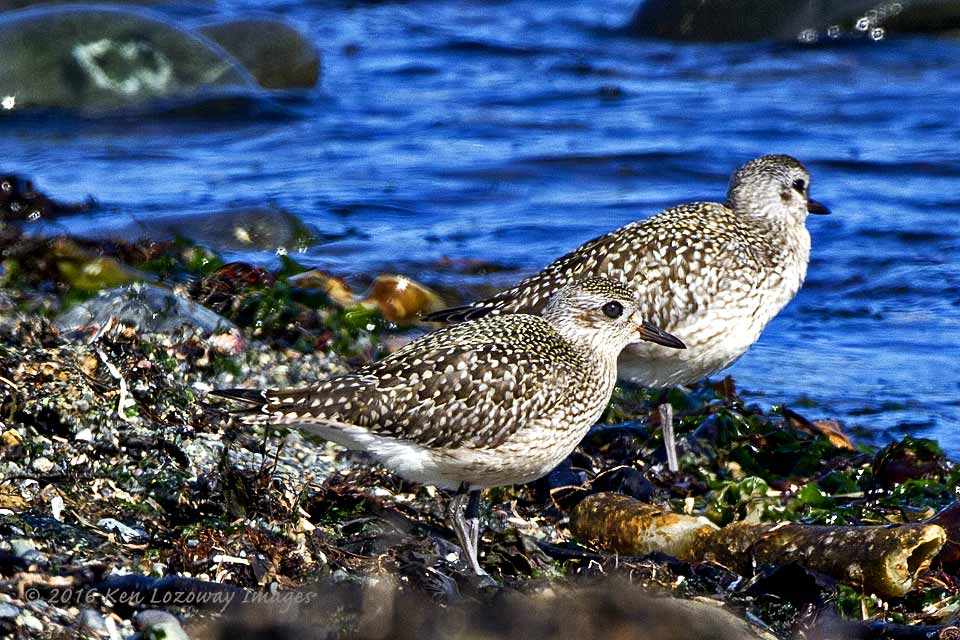
Following several unsuccessful attempts at a number of different locations, I finally located a small group of males & females foraging in the early morning on a fog-shrouded beach. Despite working in less than ideal lighting conditions I managed to capture several acceptable images of the birds displaying typical plover style feeding behavior; i.e. running, pausing and plucking small invertebrates.
I hope you find the images and information included with this post interesting and informative, and please don’t hesitate to leave comments and/or share this blog post.
Order: Charadriiformes
Family: Charadriidae
Species: Pluvialis squatarola
The Black-bellied Plover is the largest and most common of the three North American plovers. Its preference for open feeding habitats (lower coastal intertidal zones) its bulky structure, and very upright stance make it a fairly conspicuous species. They can generally be observed wadding in shallow water but usually do most of their foraging in exposed muddy substrates within the lower to mid intertidal zones.
Feeding: Primarily forages along coasts in typical plover style: run, pause, and pluck; feeds on insects, worms, bivalves and crustaceans.
Occurrence: Breeds in High Arctic habitats from western Russia across the Bearing Sea to Alaska, and east to Baffin Island. Winters primarily in coastal areas from southern Canada and US, south to southern South America. Found inland during migration. Migrates south all the way to South America.
(Taken from Birds of Canada-David M Bird, Ph.D. First Edition 2010)
NOTE: Click here for a link to an excellent short audio about Black-bellied Plovers with recordings of the birds vocalizing.
Order: Charadriiformes
Family: Charadriidae
Species: Pluvialis squatarola
The Black-bellied Plover is the largest and most common of the three North American plovers. Its preference for open feeding habitats (lower coastal intertidal zones) its bulky structure, and very upright stance make it a fairly conspicuous species. They can generally be observed wadding in shallow water but usually do most of their foraging in exposed muddy substrates within the lower to mid intertidal zones.
Feeding: Primarily forages along coasts in typical plover style: run, pause, and pluck; feeds on insects, worms, bivalves and crustaceans.
Occurrence: Breeds in High Arctic habitats from western Russia across the Bearing Sea to Alaska, and east to Baffin Island. Winters primarily in coastal areas from southern Canada and US, south to southern South America. Found inland during migration. Migrates south all the way to South America.
(Taken from Birds of Canada-David M Bird, Ph.D. First Edition 2010)
NOTE: Click here for a link to an excellent short audio about Black-bellied Plovers with recordings of the birds vocalizing.