Ken Lozoway Images
  • Home
  • Galleries Home Page
  • Licensing
  • Auto Biography
  • Scenics & Landscapes Gallery
  • Sports
    • Royal Bay Lacrosse Academy >
      • Royal Bay Ravens Lacrosse 2024/25
    • JDF Grizzlies Hockey >
      • Under 18 Tier-2 Grizzlies 2024/25
      • Juan De Fuca U13 Tier 1 Grizzlies 2024/25
    • JDF Lacrosse >
      • JDF 2022 Peewee A1 Lacrosse Team 2022
      • JDF Lacrosse U13 -2024/25
      • JDF U15 Lacrosse
    • 2024 Under 15 B. C. Box Lacrosse Provincial Tournament >
      • Lacrosse Gold Medal Final - JDF vs Ridge Meadows
      • Lacrosse Semifinal JDF vs Port Coquitlam
      • Lacrosse Round Robin Competition
    • SVI Pow Wow 2024
    • 1994 XV Commonwealth Games >
      • The Power and Glory - Physically Challenged Athletes
  • In My Bag
  • Vancouver Island - Photography Locations
    • Esquimalt Lagoon - Federal Migratory Bird Reserve
    • Goldstream Provincial Park & Nature House >
      • Goldstream River Estuary
    • Sooke River
    • East Sooke Provincial Park
    • Nanaimo River & Estuary
    • Port Renfrew >
      • Fairy Lake & Botanical Beach
    • Bamfield
    • Nit Nat Lake
    • Bute Inlet-
  • Blog
  • Fine Art Prints

Black-necked Stilts

6/28/2016

2 Comments

 
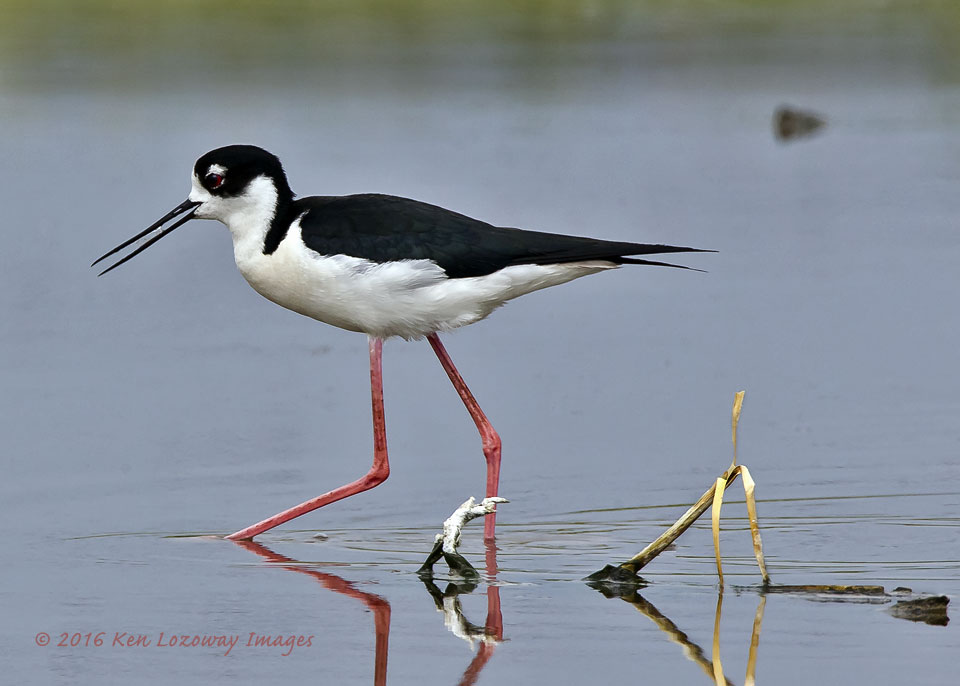
Mature Black-necked Stilt Shorebird
I added this shorebird to my life list earlier this month while on a birding trip in southern Alberta. The day started out looking less than promising as rain and thunderstorms were forecast for south-eastern Alberta. Despite heading out just after sunrise and covering a lot of territory, my bird encounters were rather few and far between until mid afternoon. I had just entered the Siksika First Nations lands when I spotted a mated pair of Black-necked Stilts, foraging in a small prairie wetland slough located approximately 50 meters off a secondary highway. Surveying the surrounding area I noticed an access road leading through a natural grassland directly adjacent to the water body. A small stand of Willows provided just enough cover to allow me to approach the birds without disturbing them. After waiting a short time the birds began moving towards me as they foraged in the shallow foreshore areas. Needless to say I spent several hours photographing the birds foraging, and even managed a few flight shots when 2 very curious dogs suddenly approached the birds. The entire session lasted about 2 hours during which I also managed to photograph several pairs of Wilson’s Phalaropes and American Avocets that were sharing the habitat.

I was preparing to leave when I noticed a rather large brownish coloured bird fly over and land near a distant bull rush covered foreshore.  Grabbing my binoculars I focused in on the bird and discovered to my utter amazement that it was a White-faced Ibis. These birds have a very narrow range that just barely extends into the lower southern areas of Alberta. Although the Ibis failed to approach my location, I did manage to get several frames of the bird foraging along and amidst the bull rushes. Having added 2 new species to my life list in one day certainly proved to be an exciting and rewarding experience.
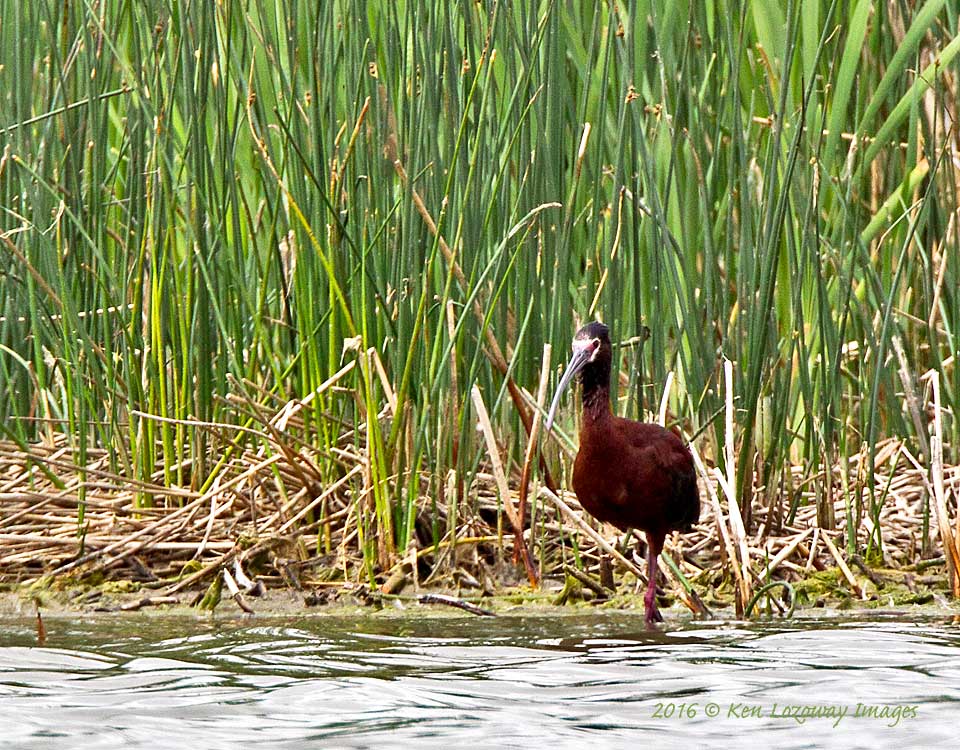
White-faced Ibis Wader

Black-necked Stilt:

Order:
Charadriiformes
Family: Recurvirostridae
Species: Himantopus mexicanus
 
This tall, slender, elegant black-and-white shorebird is an unmistakable and familiar sight at ponds and lagoons in the western and southern US as well as the southern Canadian prairies. Stilts hold the avian record for the longest legs relative to body size, and they often cross their trailing feet in flight (see photo). They often share wetland habitats with American Avocets.
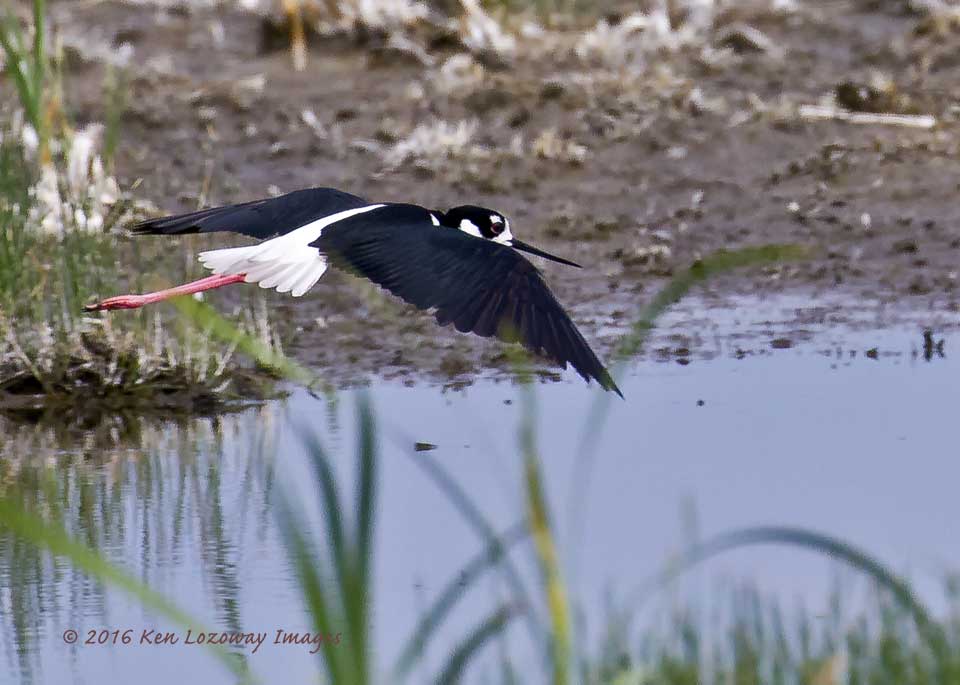


Flying Mature Black-necked Stilt
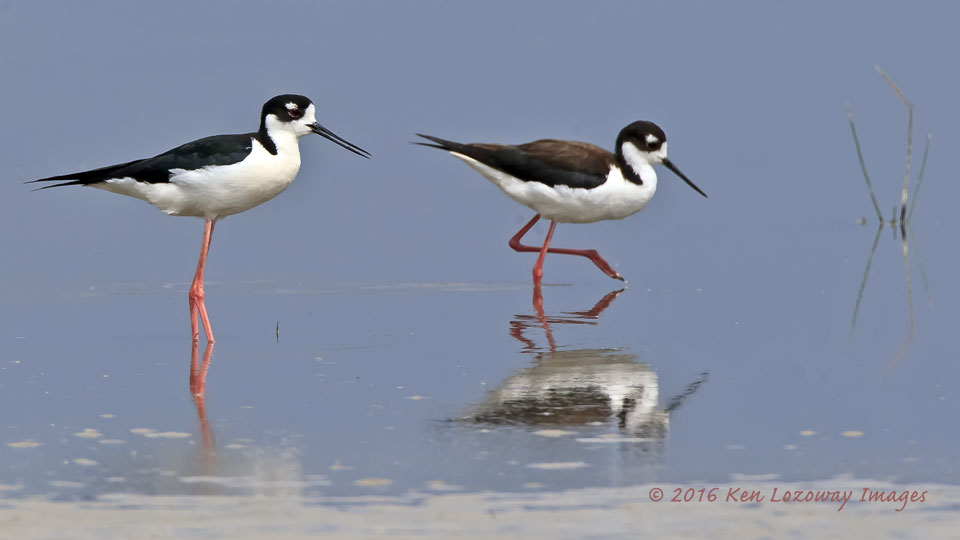
The Black-necked Stilt is a study in contrasts. Bold black and white bodies balanced on incredibly long reddish-pink legs, long black bill and big red eyes; make them unmistakable amongst other shorebirds.
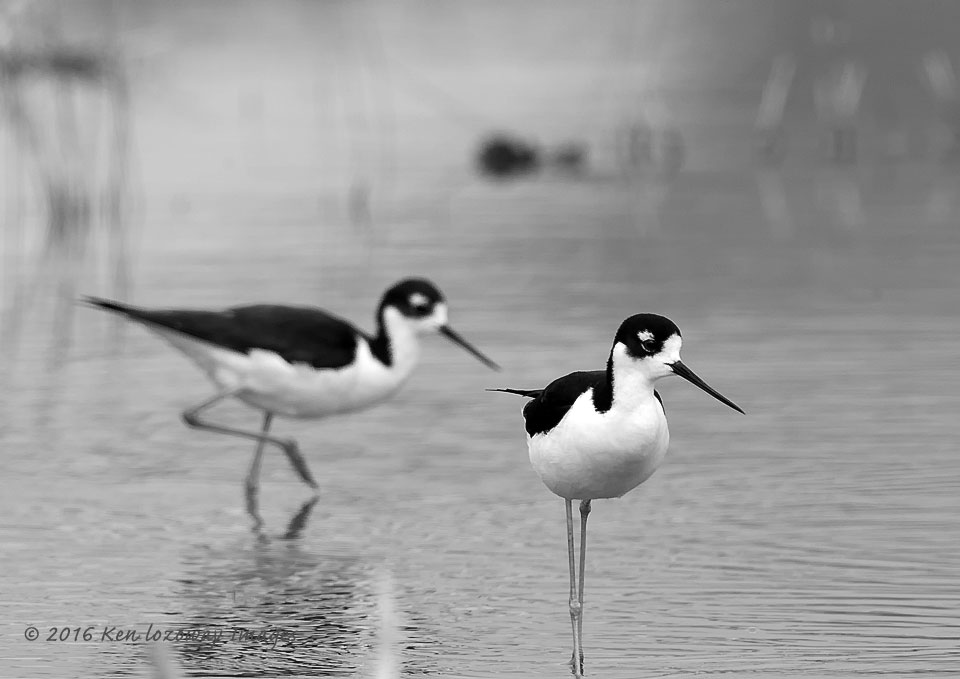
Black-necked Stilt Pair Foraging Shorebirds
Foraging behavior involves wadding gracefully through shallow wetlands and flooded fields, and using their height and excellent vision to scan for small invertebrate prey. Stilts also forage tactically feeling for prey by sweeping their sensitive bills through the water.
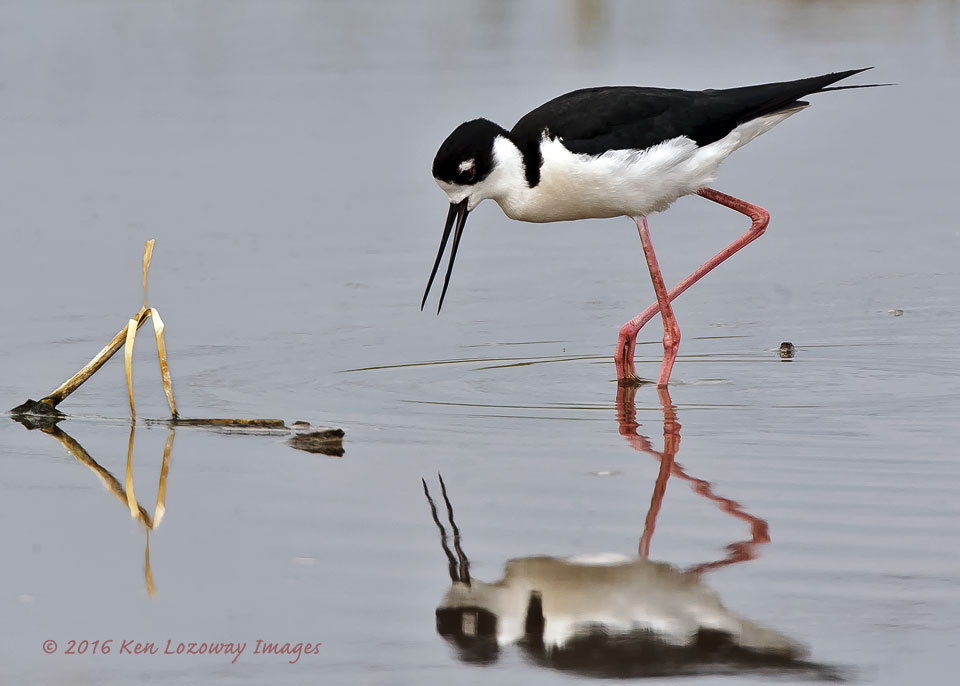
Black-necked Stilt Foraging
They breed around marshes, shallow grassy ponds, lake margins and man-made water-bodies. They also use similar habitats during migration and winter. Breeding takes place in small colonies, with several pairs sharing the same site. They tend to be gregarious by nature, and often roost together near shallow water bodies.

Black-necked Stilt Pair
Their vision and alertness enables them to quickly spot and react to predators. When disturbed during the breeding season however, all semblance of grace disappears. Agitated stilts yap incessantly, dive at predators, and feign mortal injuries (see photo). In the presence of predators, stilts quickly flock together as one intimidating black-and-white mass. This defense strategy is so effective that birds of other species often try to join the flock.
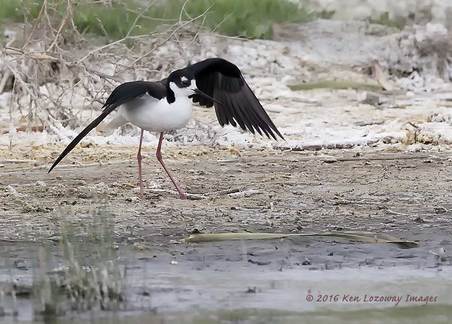
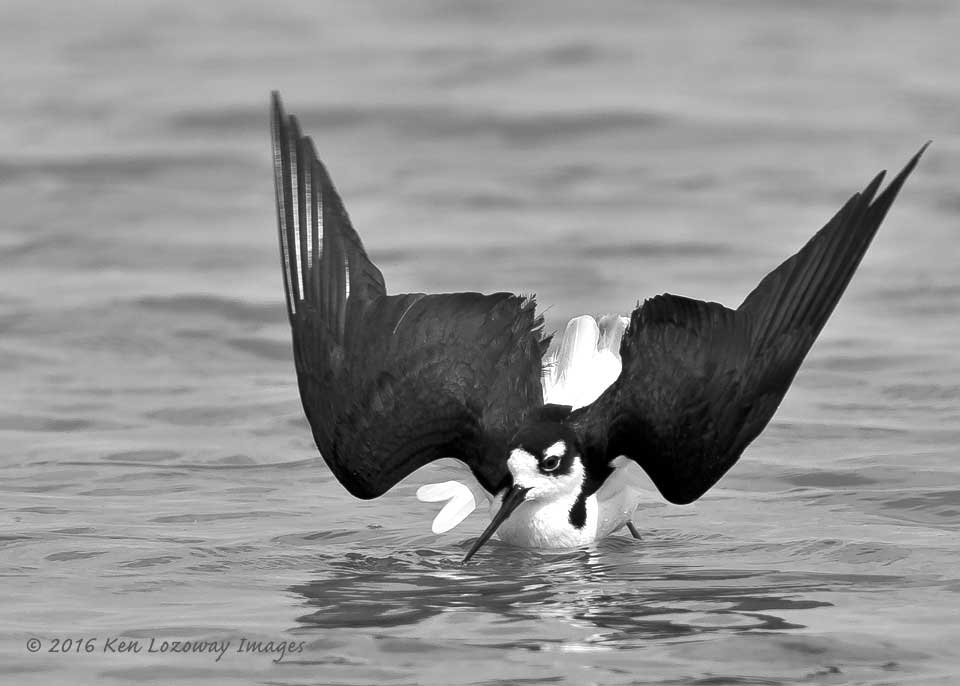
Black-necked Stilt Dispaly Behavior
Black-necked Stilt Feigning Behavior
 Vocalizations: Flight and alarm calls are loud, continuous poodle-like yip-yip-yip, given in a long series when alarmed.

(Check out an excellent narrated video by clicking on the Bird Note link at the end of the blog)
 
Nesting: Simple scrape lined with grass in soft soil; 4 eggs; 1 brood in April-May.
 
Feeding: As described above.
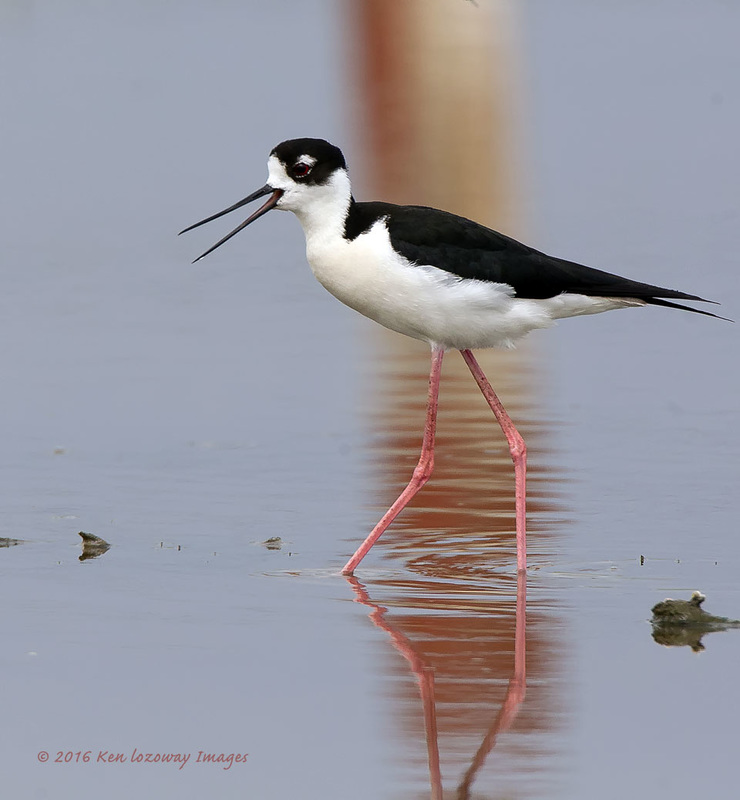

Black-necked Stilt Vocalizing Shorebird


Bird Note Video Link
2 Comments

Black-bellied Plover

4/13/2016

2 Comments

 
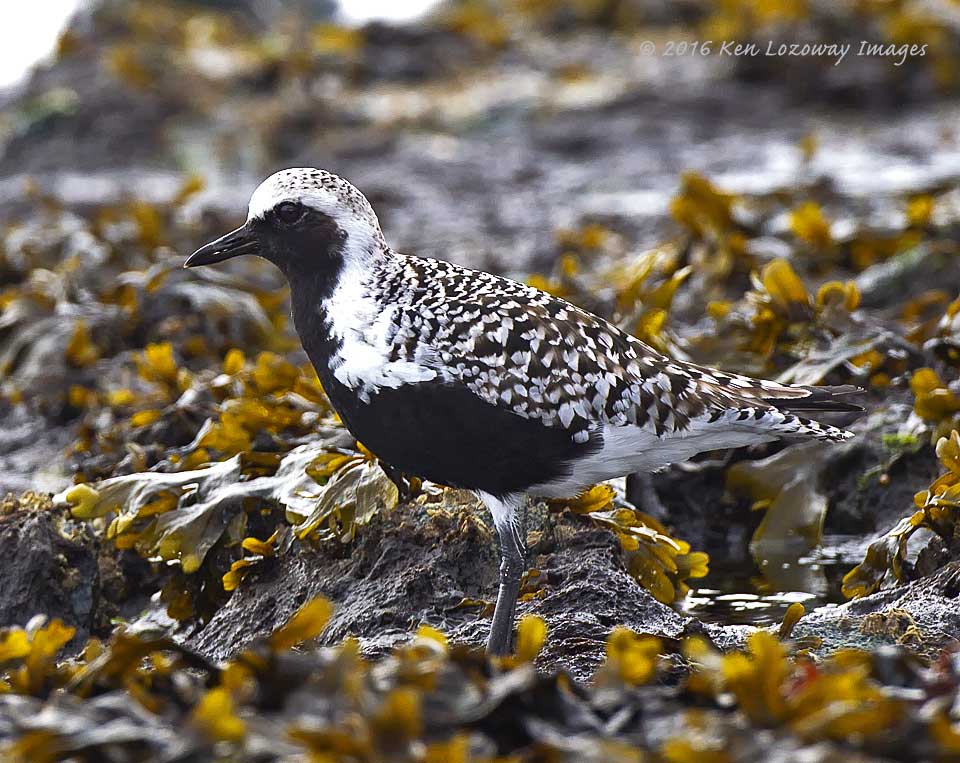
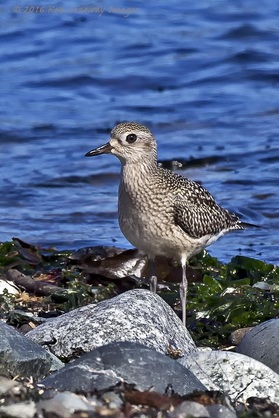
Male Black-bellied Plover Shorebird
A medium-sized shorebird of coastal beaches, the Black-bellied Plover is striking in its black-and-white breeding plumage. It is 10-13 inches in length with a wingspan of 24 inches. It has long legs, a short, pointed black bill, a round head and, a white wing stripe that is visible when it is in flight. It is the only American plover with a hind toe on its foot. Its wings extend beyond its tail when they are folded. It has a brown, black, and gray back; a white rump and belly; and a grayish-brown breast. During breeding season, its breast, face, throat, and belly are black, and it has a white stripe running from its forehead down the back and sides of its neck. Males and females look similar, but the male is more brightly colored.

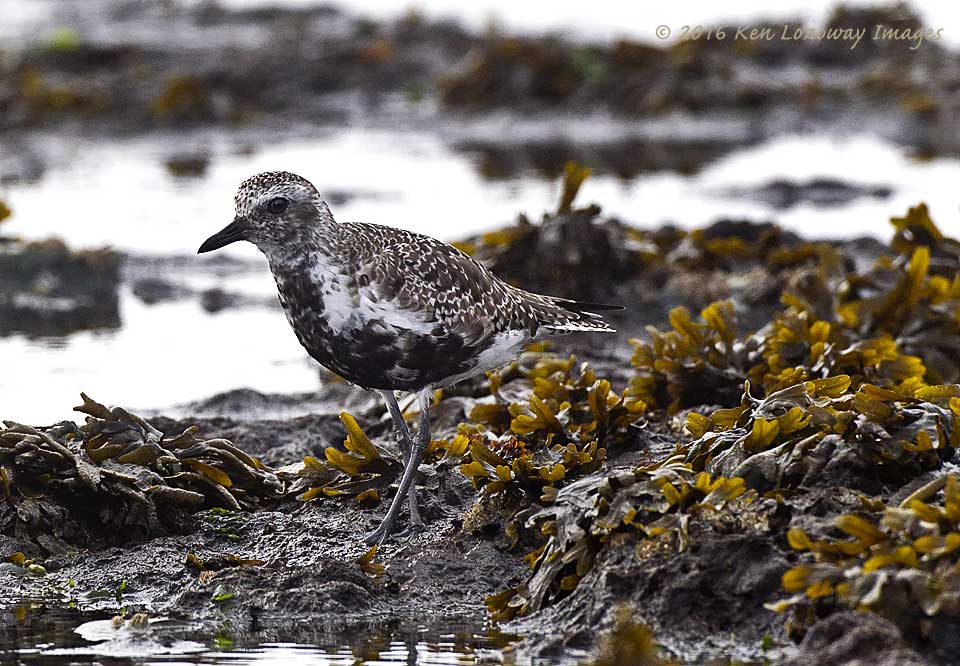
Female Black-bellied Plover Shorebird
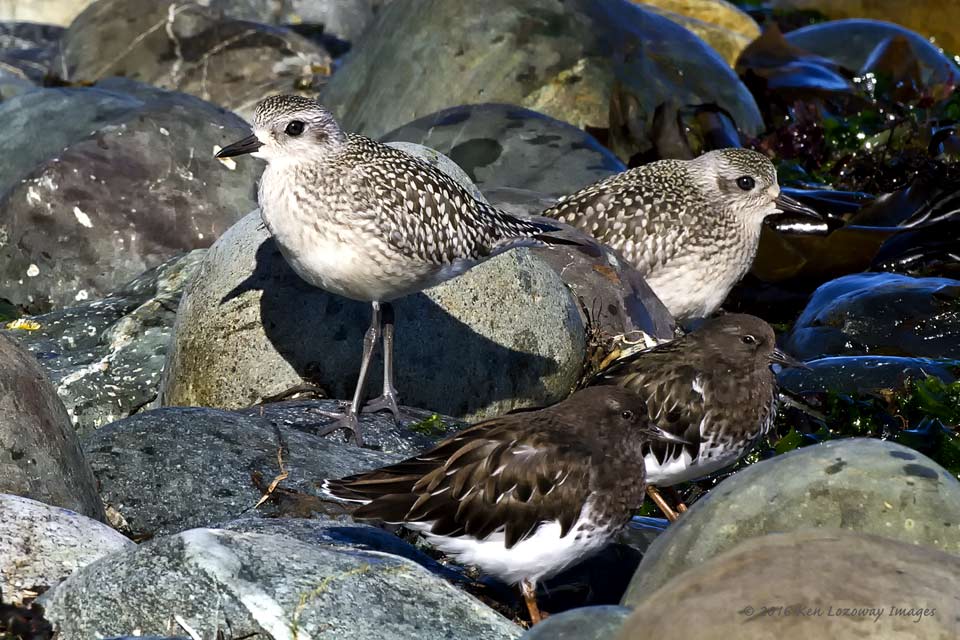
I first encountered this particular shorebird in the fall of 2015 while photographing Black Turnstones and Dunlin at Whiffen Spit near Sooke, BC.  The Plovers were foraging for invertebrates in flotsam deposited along a rocky intertidal shoreline, and didn’t seem to mind intermingling with the other two species.
 
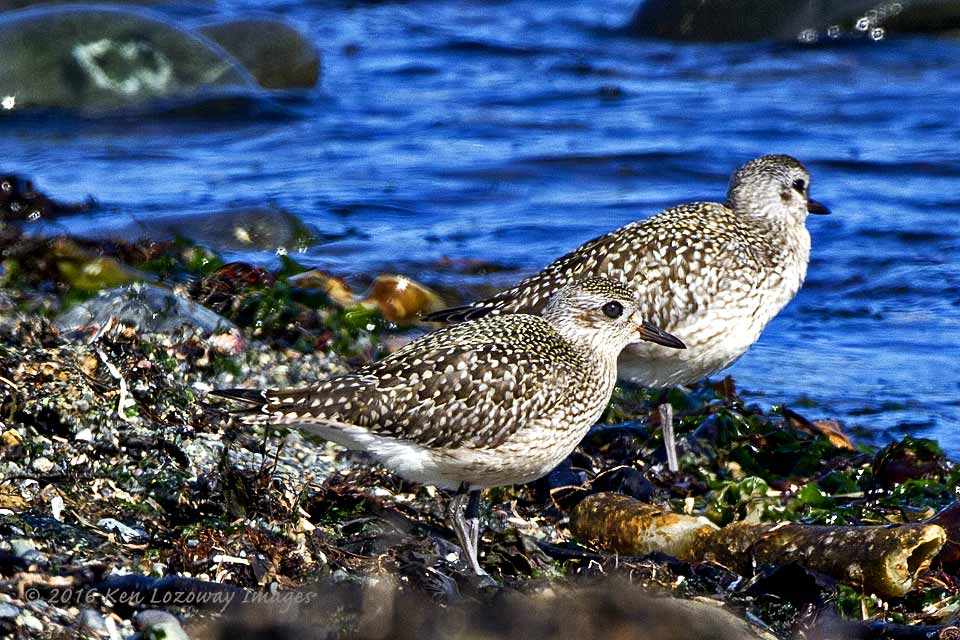
Since that first encounter I’ve been determined to observe and photograph this bird in its very distinctive black and white breeding plumage. Non-breeding condition plumage is rather dull and includes diffused streaks to the upper breast, whitish under-parts and white-edged dark-centered brownish feathers on the back.
Non-mating Black-bellied Plover Shorebirds
Following several unsuccessful attempts at a number of different locations, I finally located a small group of males & females foraging in the early morning on a fog-shrouded beach. Despite working in less than ideal lighting conditions I managed to capture several acceptable images of the birds displaying typical plover style feeding behavior; i.e. running, pausing and plucking small invertebrates.

Juvenile Black-bellied Plover
I hope you find the images and information included with this post interesting and informative, and please don’t hesitate to leave comments and/or share this blog post.
 
Order: Charadriiformes
Family: Charadriidae
Species: Pluvialis squatarola
 
The Black-bellied Plover is the largest and most common of the three North American plovers. Its preference for open feeding habitats (lower coastal intertidal zones) its bulky structure, and very upright stance make it a fairly conspicuous species. They can generally be observed wadding in shallow water but usually do most of their foraging in exposed muddy substrates within the lower to mid intertidal zones.  
 
Feeding: Primarily forages along coasts in typical plover style: run, pause, and pluck; feeds on insects, worms, bivalves and crustaceans.
 
Occurrence: Breeds in High Arctic habitats from western Russia across the Bearing Sea to Alaska, and east to Baffin Island. Winters primarily in coastal areas from southern Canada and US, south to southern South America. Found inland during migration. Migrates south all the way to South America.
(Taken from Birds of Canada-David M Bird, Ph.D. First Edition 2010)

NOTE: Click here for a link to an excellent short audio about Black-bellied Plovers with recordings of the birds vocalizing.


Black Turnstones Black-bellied Plovers
2 Comments

Surfbirds

3/24/2016

1 Comment

 
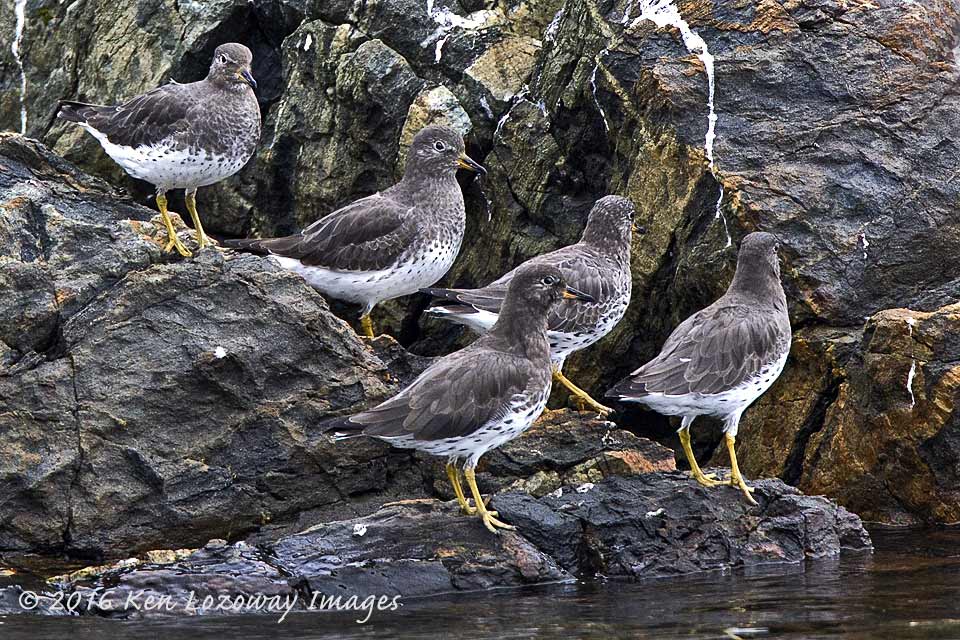
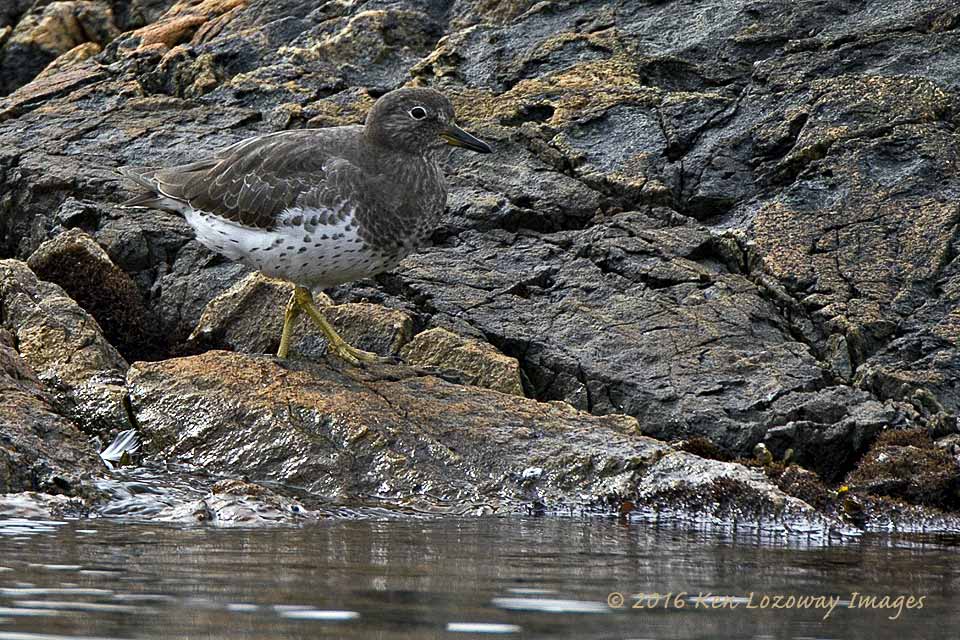
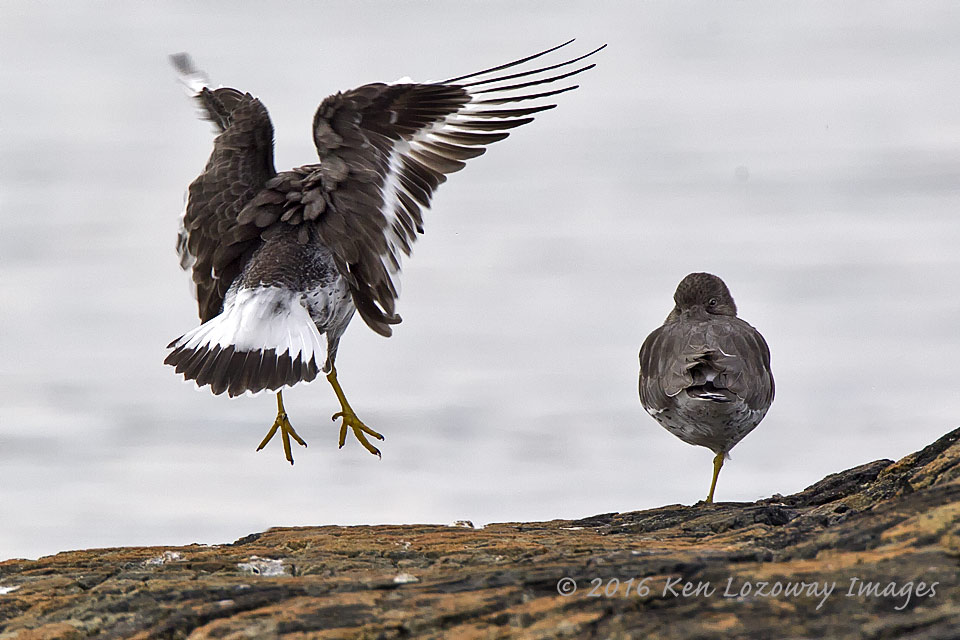
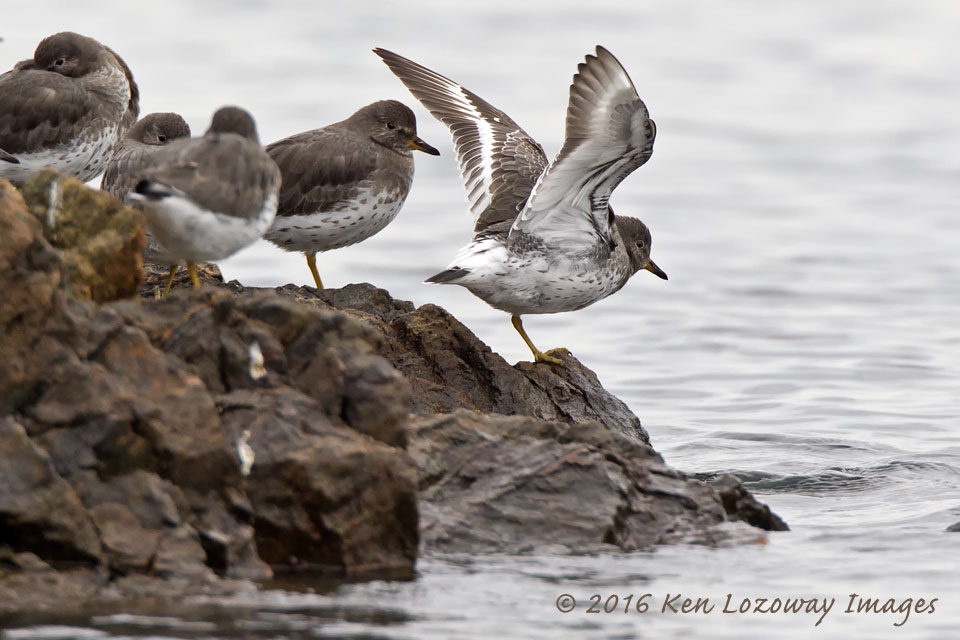
Surfbirds Shorebirds
My interest in observing and photographing shorebirds is two fold: first living on Vancouver Island I have relatively easy access to both coastal and inland habitats. Secondly many of the locations are located within the Pacific Flyway for migratory birds. Additionally I have always been interested in animal behaviour, and shorebirds provide many unique opportunities to observe and photograph social behaviors under breeding and non-breeding conditions.

Furthermore Shorebirds represent excellent subjects because some species are resident and sedentary year round, while others undertake phenomenal migrations each year. The ecology of many species also includes using several different types of habitats throughout the year, including high mountain areas, swamps, muddy, rocky or sandy seacoasts. This wide geographic and ecological scope also results in a great diversity of social systems and behaviours (see Miller 1984, Communication in Breeding Shorebirds pg 169-241).
Shorelines and edges of lakes, rivers, marshes, beaches, mudflats and coastal rocky intertidal zones can be very productive birding areas fore shorebirds and waders. These birds vary widely in size, shape and color and include species such as plovers, sandpipers, egrets, herons, ibises, cranes, flamingos, bitterns and spoonbills amongst others.

A majority of my encounters with shorebirds have occurred on the pacific west coast of Canada & the US. Generally many shorebirds spend considerable periods of time foraging within 4-10ft (?-2m) of the high-tide line along rocky intertidal shores. As with most ecological transition zones, these areas tend to have higher biodiversity and biomass than either the upland or shallow littoral areas along shorelines. Considering the importance of conserving their energy, particularly on long migrations, it’s not surprising these areas are so often frequented by shorebirds. My observations suggest this also holds true for shorebirds commonly found in freshwater and wetland habitats.

Surfbird Shorebird
Surfbird Behavior
Surfbird
 
Order: Charadiformes
Family: Scolopacidae
Species: Aphriza virgate
 
A bird with a dual lifestyle, the chunky, stubby-billed Surfbird breeds in the high mountain tundra of Alaska and the Yukon, and then migrates to the rocky Pacific coasts of both North and South America. Some individuals have been reported to migrate as far as southern Chile, a round trip of over 19,000 miles (30,500km) each year. This extremely large migratory range is amongst the largest of all North American shorebirds. With the exception of breeding seasons, Surfbirds spend a majority of their lives along rocky intertidal shores.

Surfbird Behavior Shorebirds
VOICE: Flight call is a soft whiff-if-fi; feeding flocks soft, chattering whik; display call is a kree, kree … ki-drr ki-drr, and quoy quoy quoy.
FLIGHT: Flight is swift and direct, with strong, powerful wing beats.
NESTING: Shallow lined depressions on vegetated or bare ground; 4 eggs; 1 brood; MAY-JUNE.
FEEDING: Eat mainly insects, especially beetles; also aquatic mollusks and crustaceans, such as mussels and barnacles.
OCCURRENCE: Except when breeding, Surfbirds spend their lives along rocky intertidal shores. Breeds in low to high-elevation steep, rocky slopes of ridges and mountains; the rest of the year is spent exclusively on rocky Pacific coastlines, typically within 6-1/2ft (2m) of the high tide line. This is the narrowest range of all North American shorebirds.

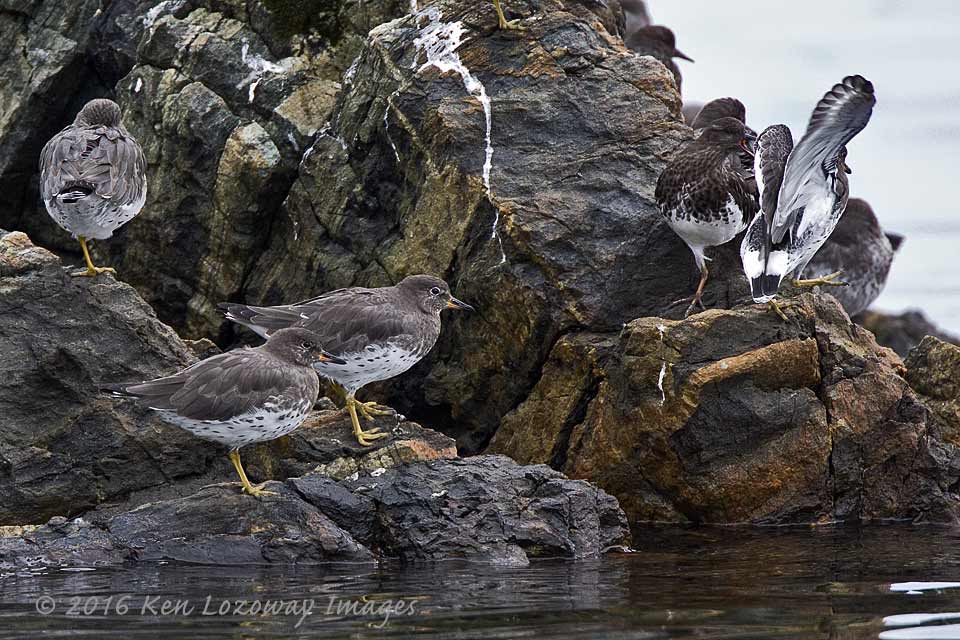
The two images below illustrate territorial behavior between a group of Surfbirds and an intruding Black Turnstone.
Surfbirds Black Turnstone
(Taken from Birds of Canada-David M Bird, Ph.D. First Edition 2010)
 
NOTE: I hope you enjoyed and found this post interesting and informative. Please leave your feedback comments, as I would like to make posts one of this type a regular feature on the web site. Thank you.

1 Comment

WiFi Remote Control for Canon DSLR Cameras

9/4/2015

1 Comment

 
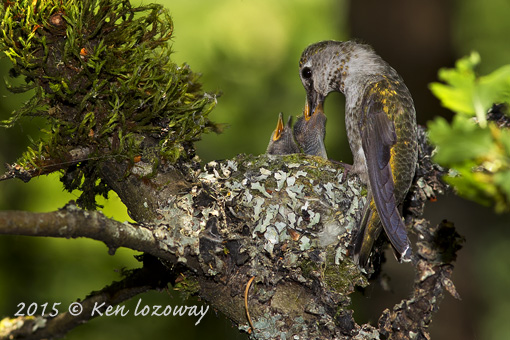
Anna's Hummingbird Feeding Young
Earlier this year I had the opportunity to photograph a Anna's Hummingbird brooding and feeding her young. It soon became apparent that my initial attempts were causing the adult to remain away from her nest for extended periods of time. I also discovered that the EOS app. for taking wireless remote control of my cameras functions was not compatible with my  EOS 7D & EOS 1D Mk IV camera bodies. 

Following some research on the internet I discovered a very useful product called WEYE FEYE available from a US company called XSORIES. Click Link XSORIES.  

The Weye Feye is an innovative external device that enables remote and wireless control of a DSLR camera via a smartphone/tablet application. The device generates its own WiFi network and connects to the DSLR via a USB port. It is compatible with most Nikon and Canon DSLR cameras. The App is available as a free download for Android and iOS. 

The high-performance central processing unit and long-life battery ensures its self-sufficient operation.  A LiveView function and the built-in web server allow you to edit the images, transfer them to your mobile device and share them instantly on social networks. The device lists for $149 US, however I purchased mine from a local London Drugs for just under $200 Cdn.   

There are some informative reviews on YouTube and Photographylife: Click the link below to access the review on  Photographylife

  
1 Comment

Observations of a Nesting Pair of Pileated Woodpeckers-Weeks 5 & 6

5/20/2015

1 Comment

 
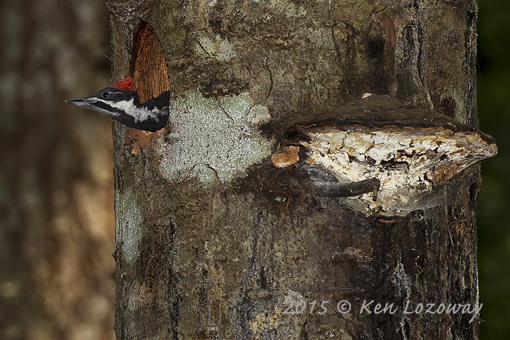
Pileated Woodpecker Nestsite


Week #5 (May 3 – 9) Observations were conducted on the 5th and 8th. Behavior typical of parents brooding nestlings continued and audible sounds are being heard coming from within the nest cavity. Hatchlings would have been born naked and helpless; remains of the yolk sac would still be attached to the abdomen; eyes would be covered with a membrane with no evidence of slits and upper and lower beaks would both be tipped with egg tooths.

Rapid growth in body length and wing chord would be occurring, and has been reported to slow in the second week as feathers begin to erupt. Traces of lines across the eyelid would have occurred on day 3-4 and the eyes would have opened by day 9-10. The newly hatched young have been reported being able to raise their heads and open their beaks by the end of the first week, and would be able to raise themselves on their legs and flex their toes. As the nestlings began molting into juveniles most body feathers would have erupted by day 7 and the red cheek stripe of a male bird would become visible by day 14. The young will be able to control their body temperatures after about day 10 at which time brooding behavior will stop.

Both parents appear to be foraging and feeding the young nestlings equally at intervals of between 35-60 minutes. On May 3rd I was hearing occasional rasping begging sounds coming from within the nest cavity, and stronger rasping sounding like a beehive were heard on May 9th. All feeding activity appears to be occurring within the nest, with parents arriving silently (no prior vocalizations) and briefly remaining perched outside the nest cavity entrance.
They are then entering with only their tail feathers remaining visible outside the entrance and then disappear completely into the cavity.
This type of behavior has been reported to occur when nestlings are 7-15 days old. After a minute or so the adult reappears at the entrance with a fecal sac and flies off. The fact that young are actually producing these is an important adaptation for the purpose of maintaining nest sanitation.


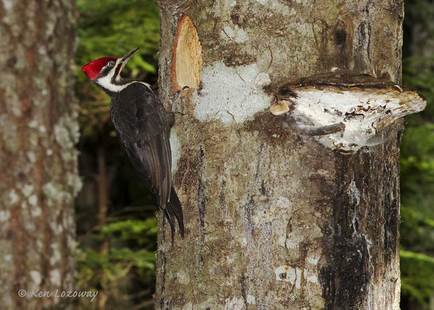
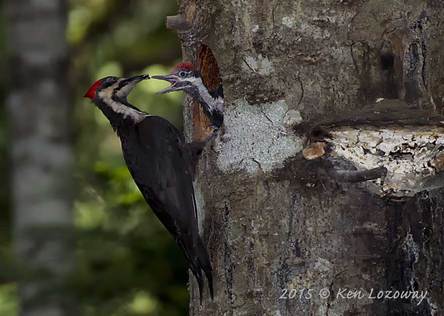
The image below is of the female about to leave the nest with a fecal sac in its bill.

Pileated Woodpecker
Pileated Woodpecker
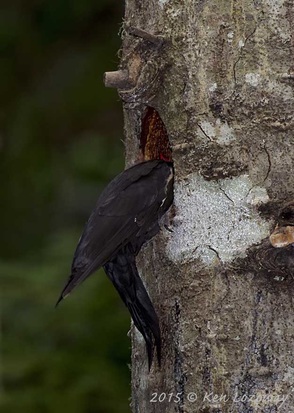
Later in the week I  observed the adults feeding the young either partially in the cavity with lower body sticking out or with the entire body remaining outside of the cavity (see image above).  

Additional observation during the week included the following:
  • adult birds have been vocalizing at a distance, presumably as they are foraging for food items;
  • upon arriving for a feeding event they are perching on a tree near the nest tree for periods of up to 5-10 minutes, preening and bobbing their heads as if inspecting the tree for additional food items.
  • Occasional drumming on a near by tree has also been occurring before a silent arrival is completed.

Week #6 (May10-16)
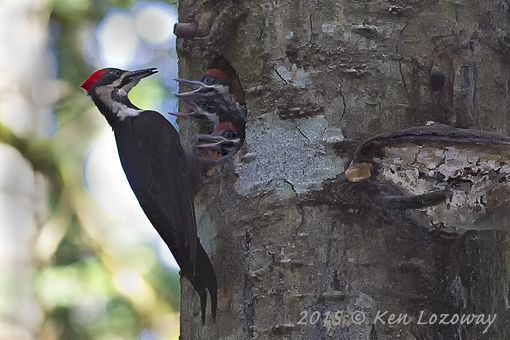
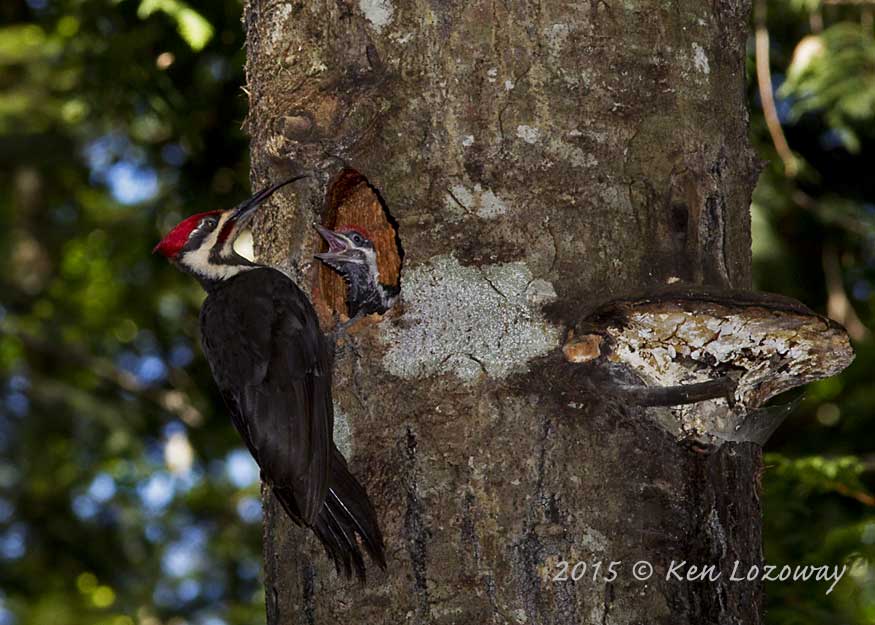
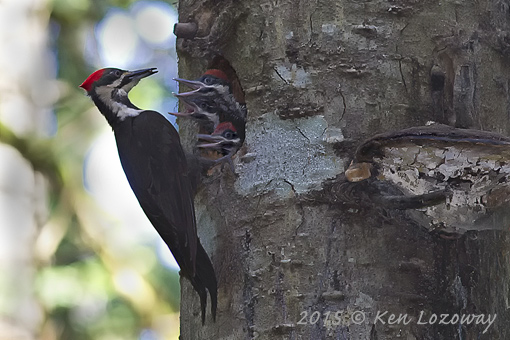
Three juveniles are now appearing at the entrance begging for food. Feeding intervals have increased to between 40 & 80 minutes.
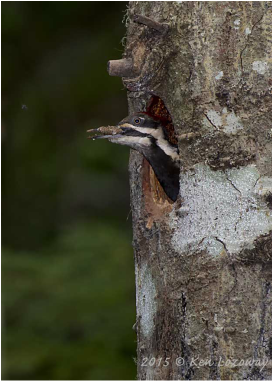
Pileated Woodpecker Feeding Young
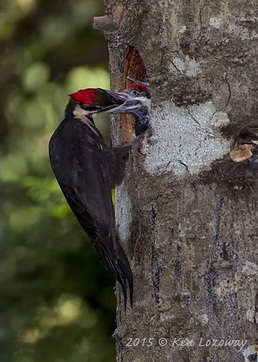
Young are being fed by adults regurgitating food and the food items are reported to consist of primarily invertebrates. They are now being feed while peering out the cavity entrance, giving repetitive yuk calls with raised crest, and rasping loudly while jabbing at the parents bill. The young beg to be fed and vocalize throughout the entire feeding interval. They then generally remain at the entrance for up to 2 minutes before disappearing back into the nest cavity.  They are also giving a churring sound and a new adult-type vocalization sounding like a-nah. I have also begun hearing an occasional cuk sounding, suggesting the young are approaching 16-19 days old. 

The image below is of the adult male regurgitating food prior to feeding the young juvenile. Notice the extremely long tongue.
Pileated Woodpecker Nestsite
Pileated Woodpecker Fledglings
As illustrated in the image below the parents are feeding 3 healthy juveniles, and it appears there are 2 males and 1 female.

Their Their appearance at the entrance confirms they can now climb up the sides of the cavity. According to other researchers this behavior has been observed as early as days 11–13 and is well established by days 16–19. Towards the end of the week the young were being fed about every 60 – 90 minutes, and all feeding activity is occurring at the cavity entrance. Feeding intervals will apparently increase to every 2 hours next week. Young are being fed by adults regurgitating food items and then inserting their bills into the throat of the young. Food items are reported to consist mostly of invertebrates (grubs beetles insects). Adults are also vocalizing from a distance prior to arriving and again after leaving the nest tree. 


Pileated Woodpecker Feeding Young
Pileated Woodpecker Feeding Fledgling
Pileated Woodpecker Fledgling
I've included the two images above to illustrate how quickly the juveniles are developing. The first image was taken on May 15th. The 2nd image was taken on Wednesday May 20; i.e. Week #7 
Week #7 (May 17-23) In addition to taking more still images I also plan to shoot some video of the juveniles being feed. 

Anticipate observing the following behaviors this week:
  • Parents will cease removing fecal sacs 2-5 days before the young fledge;
  • Juveniles vocalizing, flexing their wings, and teetering on the rim of the nest cavity prior to actually leaving the nest.
  • The young fledging and leaving the nest tree.
It will be sad to see them go but I've had a great time watching, documenting and photographing this whole process. I still find it amazing that they chose to nest within 2 meters of the hiking trail. However the remnants of three older nest cavities suggests the birds are quite at ease with the human activities (including barking dogs) occurring below them. Check back next week for a complete summary of Week#7, and hopefully some interesting video. 
1 Comment

Adams River-Sockey Salmon Run

5/4/2014

0 Comments

 
Spent 3 days last month (October) at the Adams River photographing the annual Sockeye salmon run. This year is the pre-dominant year so the returning numbers were low compared to those expected next year. Managed to get some images however the primary purpose for the trip was to do some reconnaissance in preparation for next years dominant run. A million fish are expected to make the 72 hour transit from the coast, and the river apparently turns red with spawning salmon. Really looking forward to this adventure. 
0 Comments

    Popular Quick Links

    Canadian Geographic
    Nature Conservancy
    British Columbia Magazine
    Outdoor Photography Canada
    Blackfish Studio
    Digital Photography Review
    The-Digital-Picture.com

    Archives

    June 2016
    April 2016
    March 2016
    September 2015
    May 2015
    April 2015
    February 2015
    October 2014
    May 2014

    Blog Links:

    All
    Favorite Places
    Photo Adventures
    Photo Gear
    Pictures

    Categories

    All
    Favorite Places
    Photo Adventures
    Photo Gear
    Pictures

© 2013  Ken Lozoway - All Rights Reserved
Contact / About / Blog