Ken Lozoway Images
  • Home
  • Galleries Home Page
  • Licensing
  • Auto Biography
  • Scenics & Landscapes Gallery
  • Sports
    • Royal Bay Lacrosse Academy >
      • Royal Bay Ravens Lacrosse 2024/25
    • JDF Grizzlies Hockey >
      • Under 18 Tier-2 Grizzlies 2024/25
      • Juan De Fuca U13 Tier 1 Grizzlies 2024/25
    • JDF Lacrosse >
      • JDF 2022 Peewee A1 Lacrosse Team 2022
      • JDF Lacrosse U13 -2024/25
      • JDF U15 Lacrosse
    • 2024 Under 15 B. C. Box Lacrosse Provincial Tournament >
      • Lacrosse Gold Medal Final - JDF vs Ridge Meadows
      • Lacrosse Semifinal JDF vs Port Coquitlam
      • Lacrosse Round Robin Competition
    • SVI Pow Wow 2024
    • 1994 XV Commonwealth Games >
      • The Power and Glory - Physically Challenged Athletes
  • In My Bag
  • Vancouver Island - Photography Locations
    • Esquimalt Lagoon - Federal Migratory Bird Reserve
    • Goldstream Provincial Park & Nature House >
      • Goldstream River Estuary
    • Sooke River
    • East Sooke Provincial Park
    • Nanaimo River & Estuary
    • Port Renfrew >
      • Fairy Lake & Botanical Beach
    • Bamfield
    • Nit Nat Lake
    • Bute Inlet-
  • Blog
  • Fine Art Prints

Surfbirds

3/24/2016

1 Comment

 
Surfbirds Shorebirds
My interest in observing and photographing shorebirds is two fold: first living on Vancouver Island I have relatively easy access to both coastal and inland habitats. Secondly many of the locations are located within the Pacific Flyway for migratory birds. Additionally I have always been interested in animal behaviour, and shorebirds provide many unique opportunities to observe and photograph social behaviors under breeding and non-breeding conditions.

Furthermore Shorebirds represent excellent subjects because some species are resident and sedentary year round, while others undertake phenomenal migrations each year. The ecology of many species also includes using several different types of habitats throughout the year, including high mountain areas, swamps, muddy, rocky or sandy seacoasts. This wide geographic and ecological scope also results in a great diversity of social systems and behaviours (see Miller 1984, Communication in Breeding Shorebirds pg 169-241).
Shorelines and edges of lakes, rivers, marshes, beaches, mudflats and coastal rocky intertidal zones can be very productive birding areas fore shorebirds and waders. These birds vary widely in size, shape and color and include species such as plovers, sandpipers, egrets, herons, ibises, cranes, flamingos, bitterns and spoonbills amongst others.

A majority of my encounters with shorebirds have occurred on the pacific west coast of Canada & the US. Generally many shorebirds spend considerable periods of time foraging within 4-10ft (?-2m) of the high-tide line along rocky intertidal shores. As with most ecological transition zones, these areas tend to have higher biodiversity and biomass than either the upland or shallow littoral areas along shorelines. Considering the importance of conserving their energy, particularly on long migrations, it’s not surprising these areas are so often frequented by shorebirds. My observations suggest this also holds true for shorebirds commonly found in freshwater and wetland habitats.
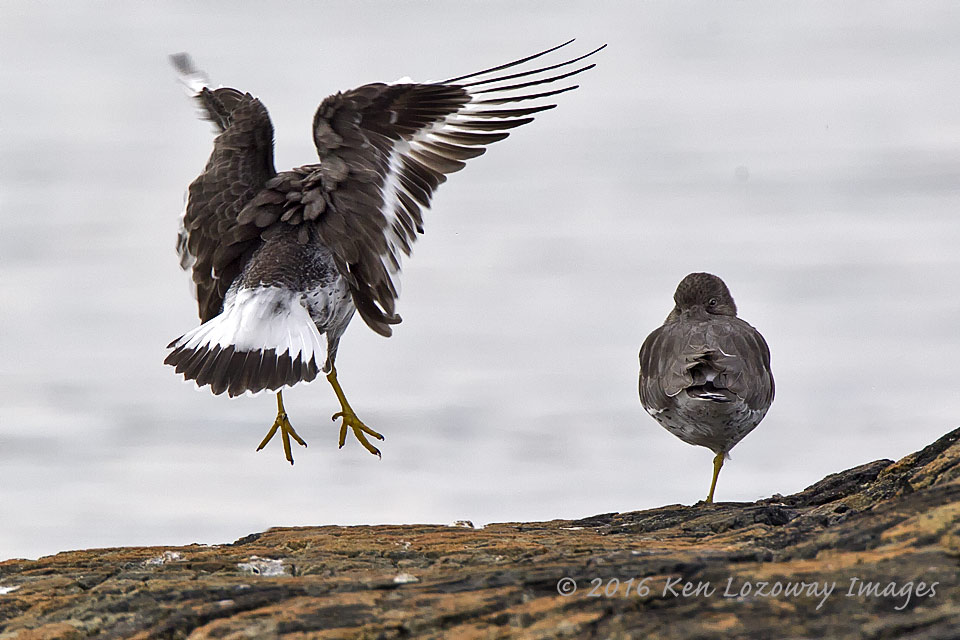
Surfbird Shorebird
Surfbird Behavior
Surfbird
 
Order: Charadiformes
Family: Scolopacidae
Species: Aphriza virgate
 
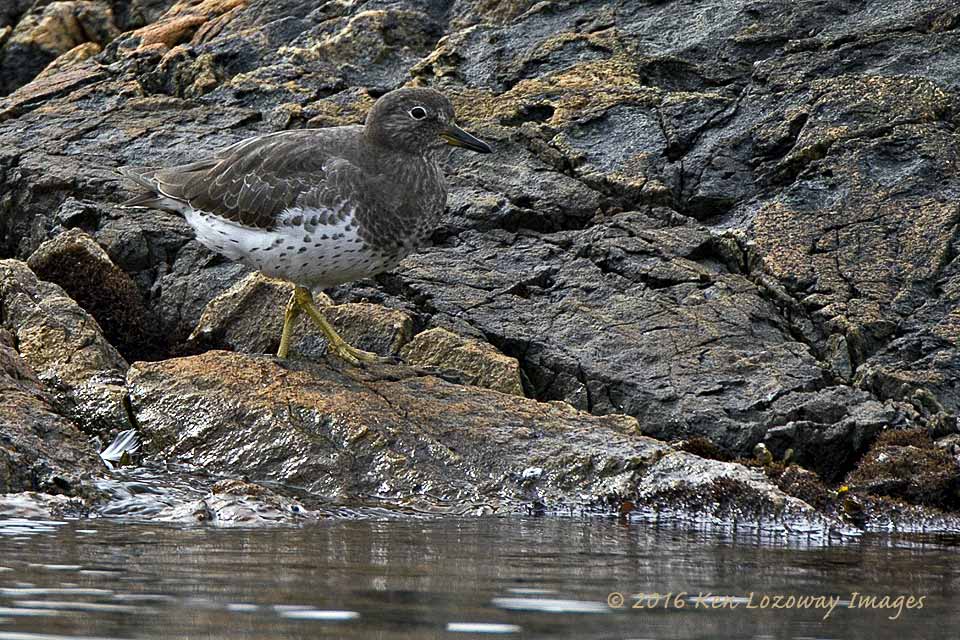
A bird with a dual lifestyle, the chunky, stubby-billed Surfbird breeds in the high mountain tundra of Alaska and the Yukon, and then migrates to the rocky Pacific coasts of both North and South America. Some individuals have been reported to migrate as far as southern Chile, a round trip of over 19,000 miles (30,500km) each year. This extremely large migratory range is amongst the largest of all North American shorebirds. With the exception of breeding seasons, Surfbirds spend a majority of their lives along rocky intertidal shores.
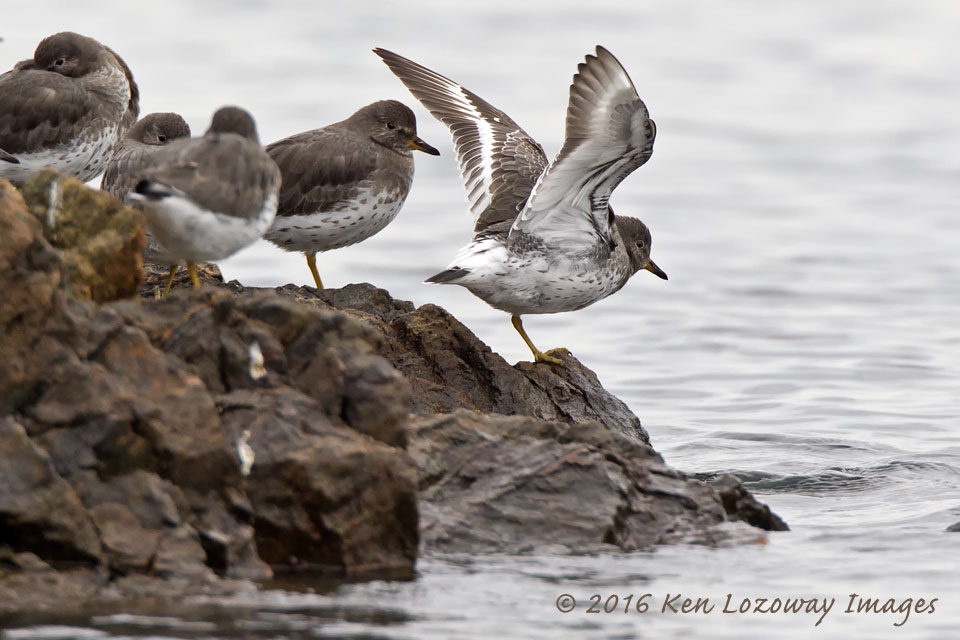
Surfbird Behavior Shorebirds
VOICE: Flight call is a soft whiff-if-fi; feeding flocks soft, chattering whik; display call is a kree, kree … ki-drr ki-drr, and quoy quoy quoy.
FLIGHT: Flight is swift and direct, with strong, powerful wing beats.
NESTING: Shallow lined depressions on vegetated or bare ground; 4 eggs; 1 brood; MAY-JUNE.
FEEDING: Eat mainly insects, especially beetles; also aquatic mollusks and crustaceans, such as mussels and barnacles.
OCCURRENCE: Except when breeding, Surfbirds spend their lives along rocky intertidal shores. Breeds in low to high-elevation steep, rocky slopes of ridges and mountains; the rest of the year is spent exclusively on rocky Pacific coastlines, typically within 6-1/2ft (2m) of the high tide line. This is the narrowest range of all North American shorebirds.

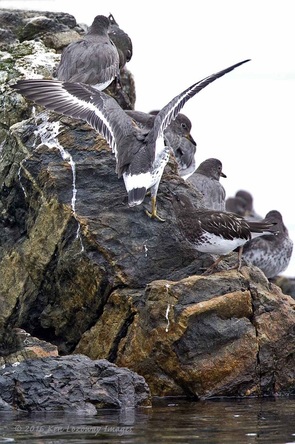
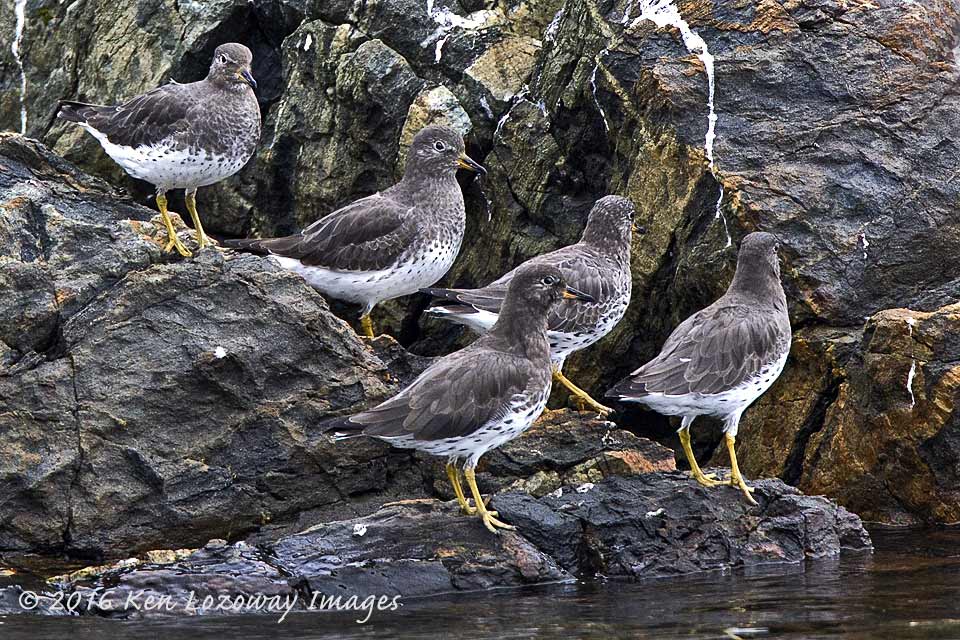
The two images below illustrate territorial behavior between a group of Surfbirds and an intruding Black Turnstone.
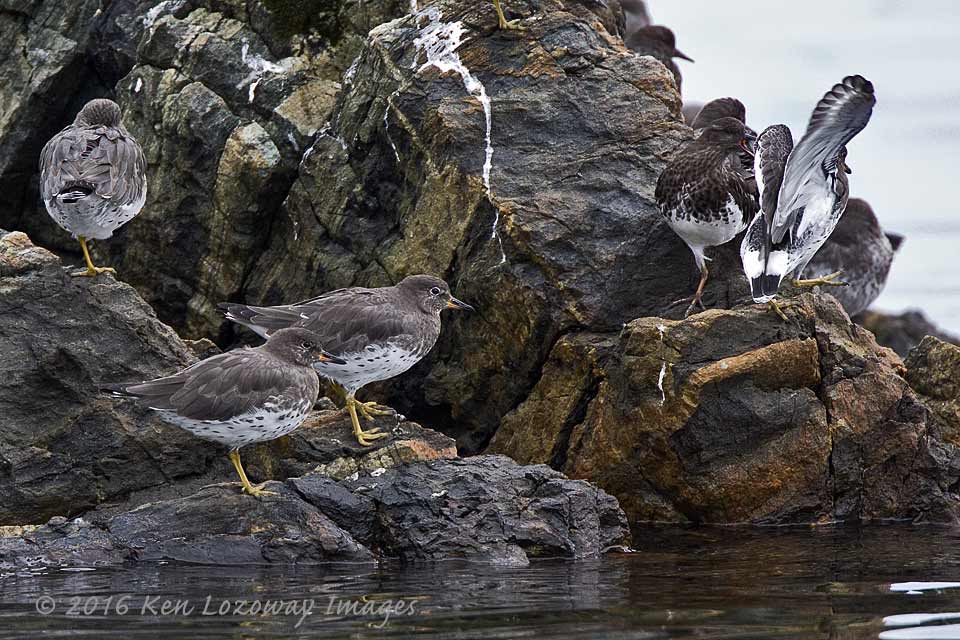
Surfbirds Black Turnstone
(Taken from Birds of Canada-David M Bird, Ph.D. First Edition 2010)
 
NOTE: I hope you enjoyed and found this post interesting and informative. Please leave your feedback comments, as I would like to make posts one of this type a regular feature on the web site. Thank you.
1 Comment

Wilson's Snipe

3/12/2016

0 Comments

 
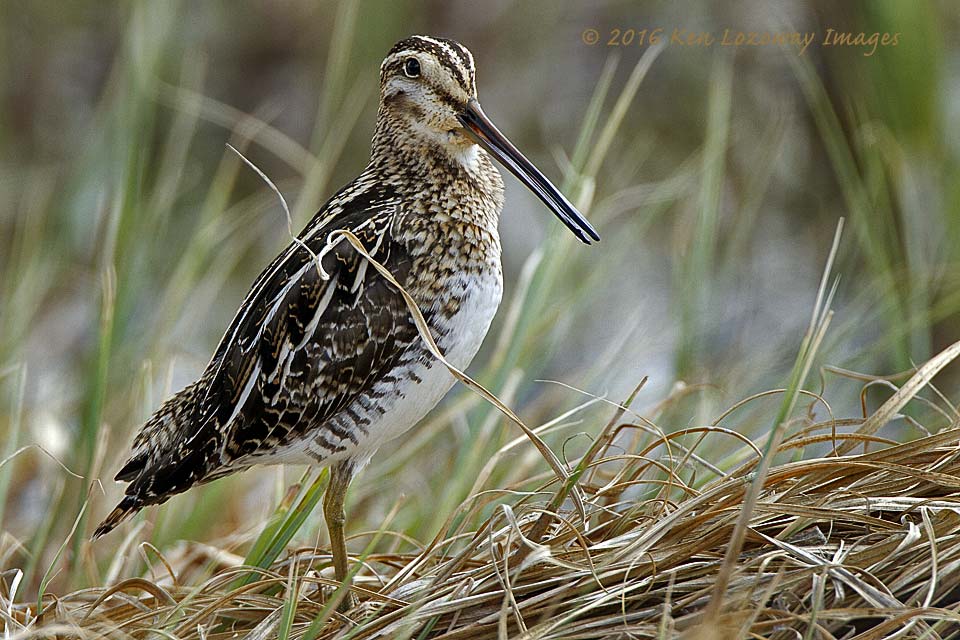
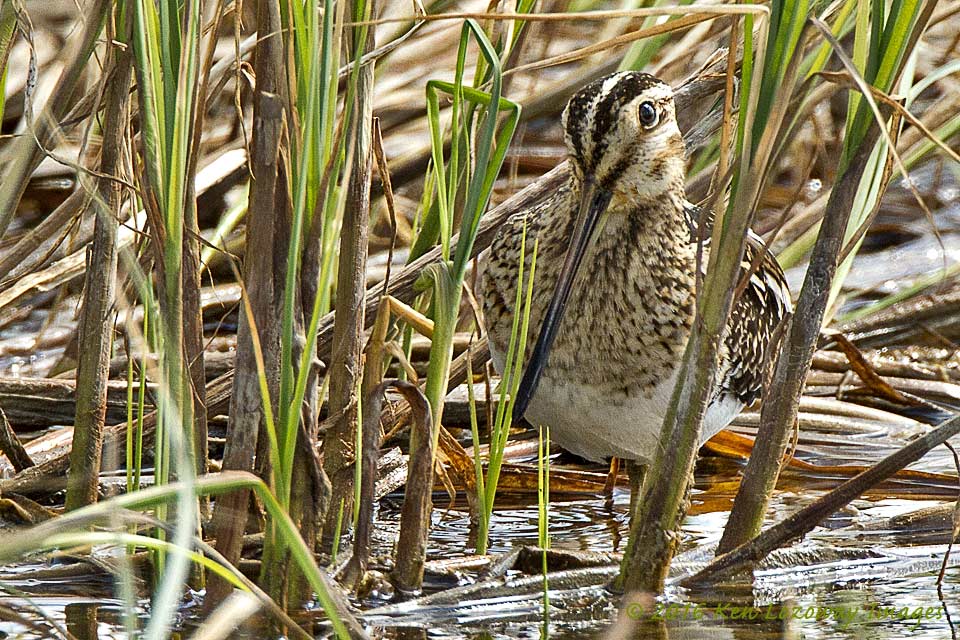
I have photographed this bird several times over the last 10 years, occasionally in BC but more often in Alberta. The most recent encounters occurred in several different locations in South-western Alberta.

Picture
Perhaps my most memorable experience resulted in not only getting some fantastic images of a Wilson’s Snipe, but also capturing my first images of a Yellow-bellied Sapsucker. I was intently following and photographing a foraging Snipe when suddenly a Yellow-bellied Sapsucker appeared in my peripheral vision. Amazingly the bird had landed on a fence post not more than a meter and a half from where I was standing, partially hidden by a small stand of willows. Trying very hard to avoid startling the bird, I turned my body and camera very slowly through approximately 110 degrees, and managed to fire off 8-10 frames before the bird flew off. The experience once again reminded me that wildlife photography often involves hours of patience and persistence followed by seconds of mayhem. A little luck can also be helpful at times.

Picture
Picture
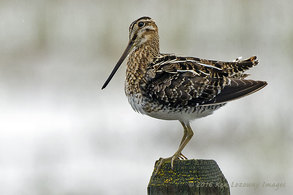
Wilson’s Snipe:  


Order-Charadriformes;  Family-Scolopacidae;  Species-Gallinago delicate
 
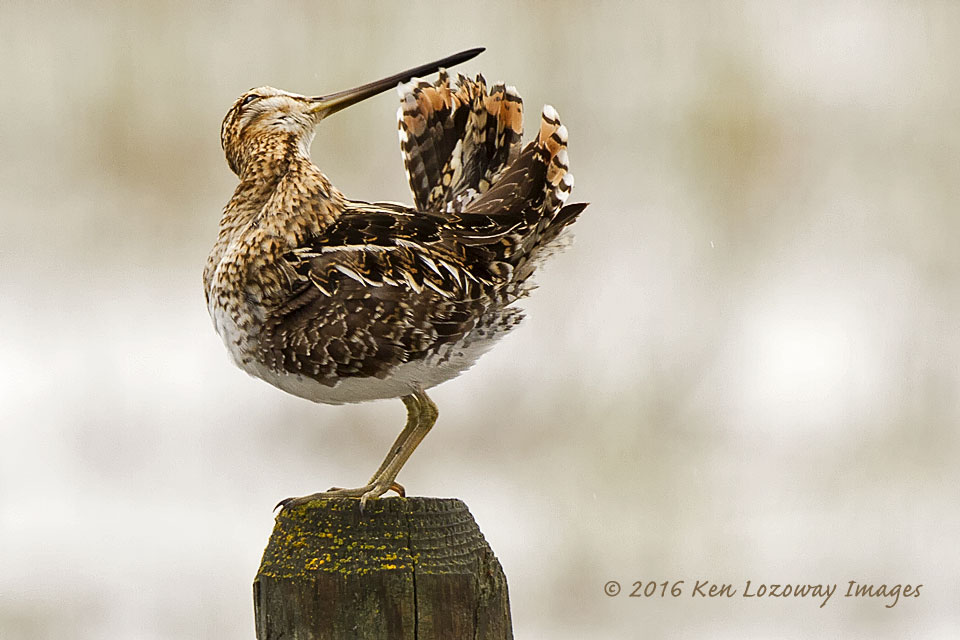
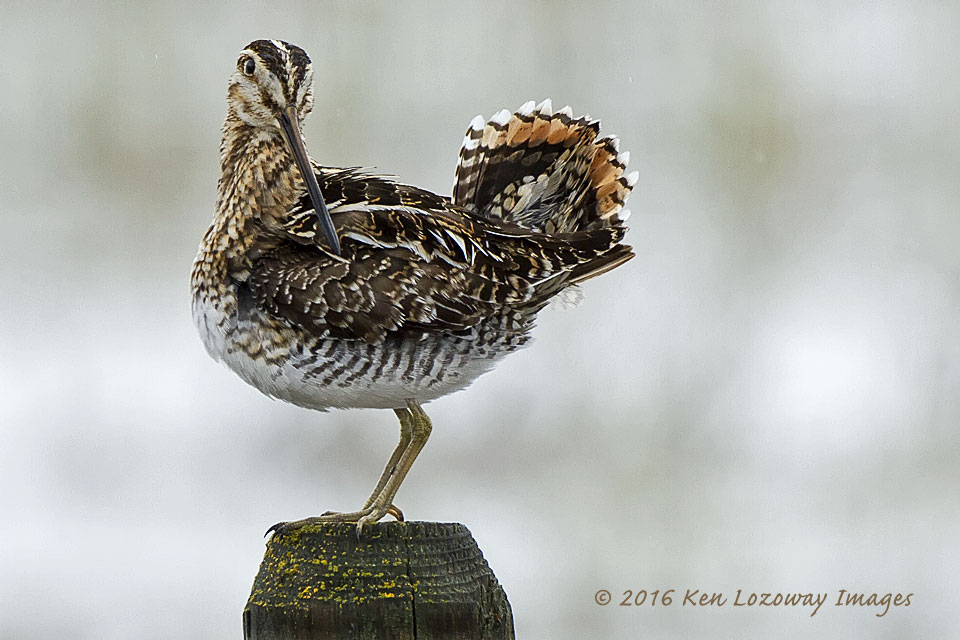
Also known as the Common Snipe, this secretive and well camouflaged member of the sandpiper family has an unsettled taxanomic history; but is now classified individually. On its breeding grounds Wilson’s Snipe have been known to produce rather eerie sounds during their arial, mainly nocturnal, display flights. The birds tend to fly up silently from the ground, and then descend quickly from heights of up to 300 feet (100m) with their tail feathers spread, producing a unique, loud and vibrating sound through the modified tail feathers.


Picture
Picture
Wilson's Snipe preening & displaying modified tail feathers
Voice: Alarm and overhead flight call is a raspy kraitsch; perched and low flying breeding birds also give repetitive, monotonous kup-kuo-kup-kup in alarm or aggression displays; also known to produce distinctive whistling sounds during territorial displays.
Nesting: Elaborate woven nest lined with fine grass usually constructed on the ground, sedge, or moss.
Generally lay 4-eggs and produce only 1 brood in May-June.
Feeding: Forages in mud or shallow water; probes deep into subsoil; diet includes mainly insect larvae, but also crustaceans, earthworms, and mollusks.
Occurrence: Widespread from Alaska to Quebec and Labrador south of the tundra zone. Breeds in a variety of wetlands, including marshes, bogs, and open areas with rich soil. Winters further south, where it prefers damp areas with vegetative cover, such as marshes, wet fields, and other bodies of water.
 
Picture
(Information taken from Birds of Canada-David M Bird, Ph.D. First Edition 2010)

Shorebird photography can be exciting and rewarding, but it can also be very frustrating. Particularly if your subject matter happens to be a flock of smaller shorebirds like Dunlin or Black Turnstones. The foraging behaviour of these species usually involves  a lot of stop and go type action as they move along the shoreline in small groups probing for food. Other species like the Wilson's snipe tend to be more secretive, and generally forage amongst bull rushes, sedges, and other types of aquatic vegetation, making it more difficult to capture images without a lot of extraneous unwanted elements in the frame. Here are some links to information I've found very helpful in raising my percentage of keeper images.

Helpful Links for Photographing Shorebirds:

1.) 6 Tips for Photographing Shorebirds - PhotoNaturalist
2.) Tips for Photographing Shorebirds - School of Digital Photography


NOTE: I hope you've enjoyed and found this post interesting and informative. Please leave your feedback & comments below, as I would like to make posts of this type a regular feature on the web site. Thank you.

0 Comments

Wilson's Phalarope

3/11/2016

0 Comments

 
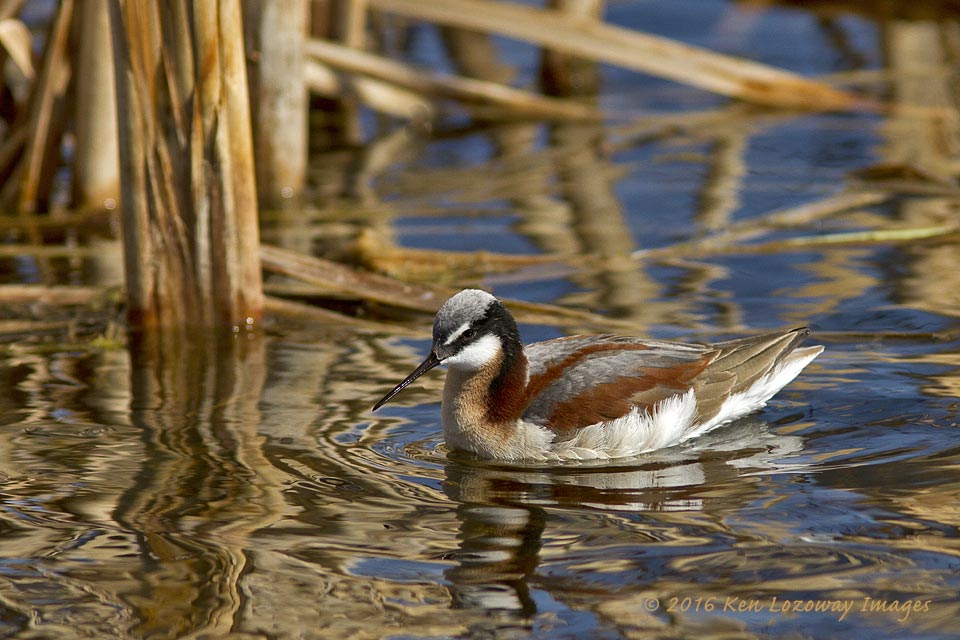
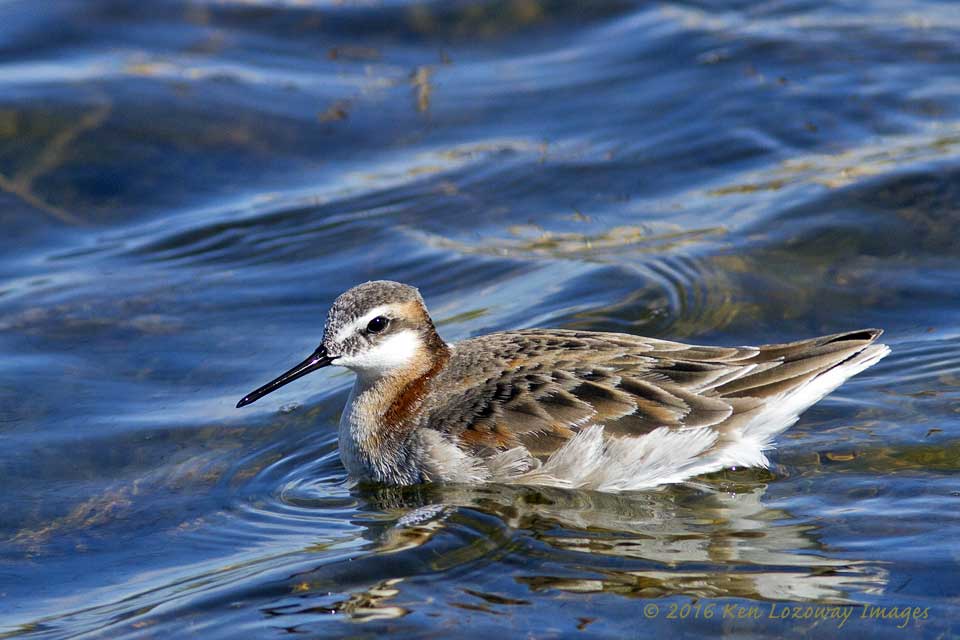
Wilson’s Phalarope: Order-Chadardriforms; Family-Scolopacidae; Species-Phalaropus tricolor
 
I usually take a photo trip to Alberta during spring and fall migration periods, and was out on an early, somewhat cool, May morning in 2012. Encountering these birds was a bit of luck as I had finished checking out most of my favourite locations, and was ready to head back to Cochrane. This small prairie slough was located directly adjacent to a Trans Canada Highway on ramp and I certainly wasn’t expecting to come across Wilson’s Phalaropes at this location. One of the advantages I find to photographing birds in the spring, is you can usually find mated pairs, at any one location.

A truly American phalarope, Wilson’s is the largest of the three phalarope species. As you can see from the mages below this is one of only a few species in which the females tend to have more colourful plumage than the males. Unlike its two relatives, it does not breed in the Arctic, but in the shallow wetlands of western North America, and winters mainly in continental habitats of Bolivia and Argentina instead of in the ocean. This species can be found employing the feeding technique of spinning in shallow water to churn up adult and larval aquatic insects, or running in various directions on muddy wetland edges with its head held low to the ground while chasing and picking up insects. This bird is quite tolerant of humans on its breeding grounds, but this attitude changes immediately before migration, as it has gained weight and its movement becomes sluggish.

Picture
Female Wilson's Phalarope
Picture
Male Wilson's Phalarope
Voice: Flight call a low nasal werf; also higher, repetitive emf, emf, emf , emf or luk, luk, luk.
Nesting: Simple scrape lined with grass; 4 eggs; 1 brood; May-June.
Feeding: Eats brine shrimp, various insects, and insect larvae.
Occurrence: Breeds in shallow, grassy wetlands of interior North America; during migration and winter, occurs in salty lakes and saline ponds as well as inland water bodies. In winter, tens of thousands can be seen in the middle of Titicaca Lake in Bolivia.
 
(Taken from Birds of Canada-David M Bird, Ph.D. First Edition 2010)
 
NOTE: I hope you enjoyed and found this post interesting and informative. Please leave your feedback comments below, as I would like to make posts one of this type a regular feature on the web site. Thank you.

0 Comments

Sooty Grouse

3/10/2016

1 Comment

 
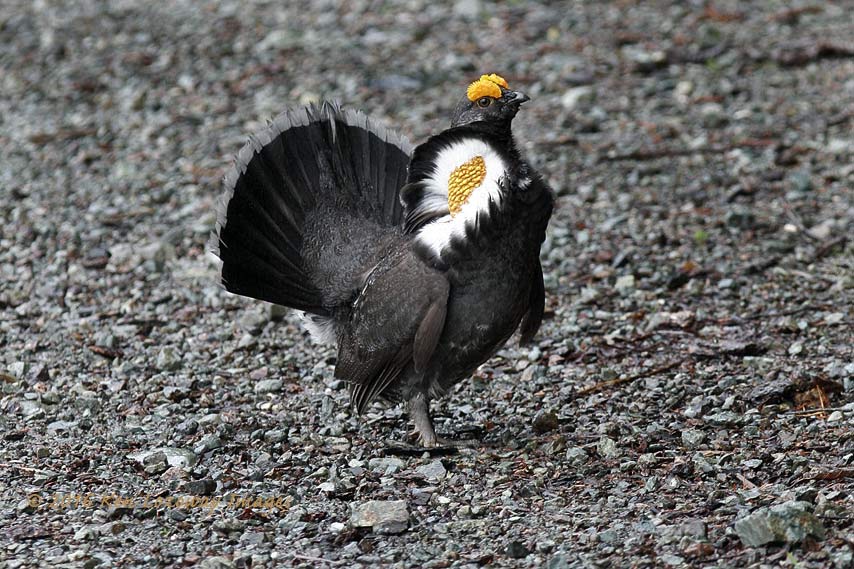
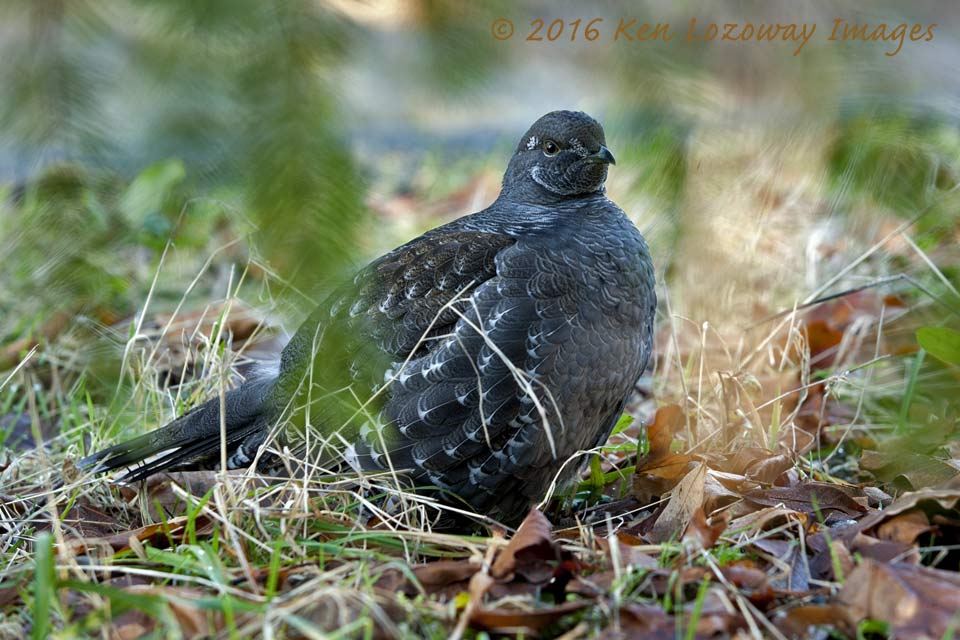
Sooty Grouse: Order-Galliformes, Family-Phasianidae, Species-Dendragapus fuliginosus
 
Recalling the numerous outings with my father as a youngster, the Sooty Grouse was one of the birds we frequently encountered. I also remember being somewhat amazed at how close I was able to come to these birds, later learning that this is quite characteristic of most grouse species in general. There were also many occasions when we would encounter them on or beside roadways, often almost running the birds over with our vehicle.

And so it was not surprising when I encountered both of the birds pictured below while driving. The first bird (Male in Mating plumage) was observed while traveling a forestry/logging road near the small coastal community of Jordan River, on Vancouver Island. Being early spring and characteristic of these birds, it was performing an elaborate mating behaviour for a female standing at the side of the roadway.


Picture
Picture
The sooty Grouse, like the Dusky Grouse, was recently reclassified as a separate species. Although primarily distinguished by its restriction to coastal mountain ranges, plumage and behavioral displays help differentiate the male Sooty Grouse from the very similar looking Dusky Grouse.
 
During courtship displays, which are most often performed in trees, the male Sooty Grouse show rough yellow air sacs. Female and chicks have a browner overall appearance to their plumage than those of the Dusky Grouse.
 
Voice: Loud six-syllable hooting: also growl hiss, cluck, purr.
Nesting: Shallow depression lined with dead vegetation, usually under small pine trees: 5-8 eggs; 1 brood; March-May.
Feeding: Feeds primarily on evergreen needles, especially Douglas Fir; will take leaves, grasses, fruit and insects when seasonally available.
Occurrence: Found west of the Rocky Mountains in Canada and the US, from sea level to the timberline. Breeds at lower elevations in open areas with grassland, forest clearings and shrubs, and moves up into thicker evergreen forests at higher elevations in winter.
 
(Taken from Birds of Canada-David M Bird, Ph.D. - Consultant Editor; First Edition 2010)

NOTE: I hope you enjoyed and found this post interesting and informative. Please leave your feedback comments, as I would like to make posts one of this type a regular feature on the web site. Thank you.


1 Comment

Capturing Beautiful Landscapes

3/3/2016

1 Comment

 
Learning how to shoot amazing landscape images that give a dramatic sense of place is an essential skill.
Picture
Here are some simple tips to help you develop those skills.
1) Be Prepared:
Be prepared to do a lot of walking to find the perfect viewpoint. Try going out in good light, at dawn or dusk (the latter two are often referred to as the golden hours when the sun is low to the horizon producing warm colored light effects. Think in advance about where the light will be coming from and choose the right time of day to be there.

The Photographers Ephemeris (TPE) is a very useful app that I've been using to plan my landscape photography outings for some time now.  Essentially TPE is a map-centric sun and moon calculator that shows you how the light will fall on the landscape at a specific location for any given date and time for almost anywhere in the world.  TPE's map-based approach means you can search for any place name (eg. Esquimalt Lagoon) or position a map pin exactly where you want it on the planet. The app is available from the iTunes store and runs on iOS and Android mobile devices.

Here are two other clickable links for more information about the app:
  1. Light Stalking
  2. Crookneck Consulting

2) Don't Forget the Tripod: Set your camera on a tripod so that it is nice and steady, to reduce any blur caused by camera movement/shake.

3) Be Creative: Play with your composition. Landscapes often work well with the horizon line positioned either in the top or bottom third of the image, rather than in the center.

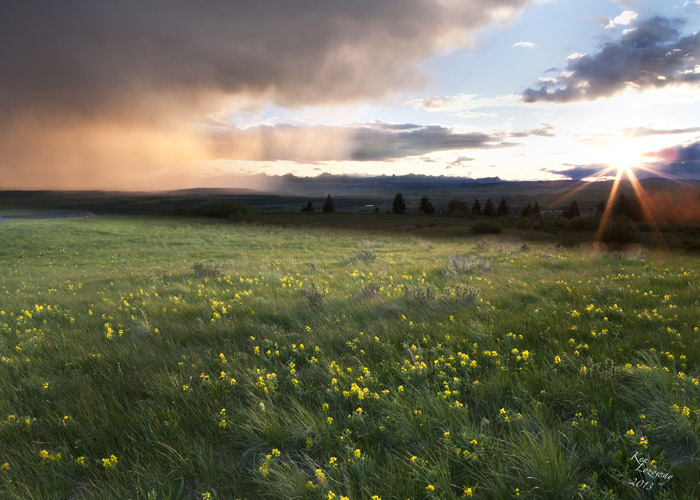
4) Neutral Density Graduated Filters: Although I will be blogging on this subject next week, ND Graduated filters are essential for creating dramatic landscapes, because they help reduce the brightness of the sky thereby balancing the exposure to match the foreground. I employed this technique to capture this dramatic image of a prairie storm over Cochrane Alberta.

Picture
1 Comment

Neutral Density Filters-What Are They, How & When to Use Them

3/2/2016

0 Comments

 
Have you ever wondered how some photographers produce those shots of clouds that look amazing and water that looks like silk running over rocks? Or perhaps those wonderful hazy looking images, where the movement is really blurred even though the scene was photographed in broad daylight?
 
Well the answer is........they used Neutral Density filters.
 
As landscape photographers we normally strive for the perfect sharp image and accomplish this by selecting a small aperture, which in turn results in fairly long exposure times.  The problem we often encounter however is our exposures are almost never long enough to blur clouds or water movement, especially during broad daylight.
 
What are Neutral Density filters?
 
In order to achieve exposure times ranging from several seconds to minutes, we need to reduce the amount of light, and this is essentially what a Neutral Density (ND) filter does.  An ND filter is simply a special semi-transparent piece of glass, resin or polyester (plastic) that effectively blocks out light from reaching the digital sensor. As a result our   exposure times are extended by seconds or minutes depending on the strength of the filter.  
 
How to Use ND filters
 
The good news is ND filters don’t radically affect the image that our cameras capture, but merely slow down the amount of time it takes for the sensor to actually record the image.  However if used when elements of our scene are moving (e.g. water, clouds or even people) they open up a world of creative possibilities.

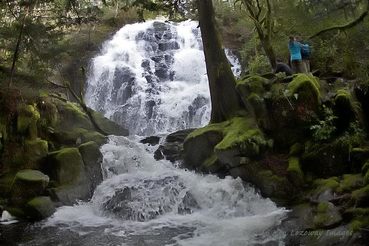
For example the image below was created using a regular shutter speed, and the effect was to freeze the waterfall; as a result it looks static and rather dull.

Picture
Picture
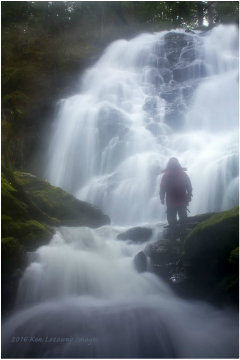
Use a ND filter to capture the water as a blur and it conveys a sense of movement. Place an individual in the foreground ....... and MAGIC!!

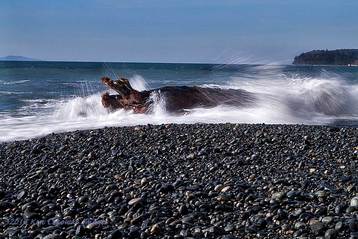
As you can see ND filters give you the flexibility to set the aperture and shutter speed you want, rather than what the conditions dictate.  I have also use ND filters  on a sunny day to slow things enough to create a sense of movement, but they’re even more effective around dawn or dusk, when they can turn an already-slow exposure into one several seconds long. This technique was used below to turn a surging tide into a gentle mist.

Picture
When to Use ND Filters
I have found that for waterfalls you don’t necessarily need a very long exposure to capture motion blur. The water is moving so rapidly, so a three-stop ND filter will work fine in the middle of the day.

However, if you want to achieve a similar effect with a seascape you’re looking at an exposure that lasts 30 seconds or more, as the sea and clouds aren’t moving as quickly.

Shooting during the ‘golden hours’ at dawn or dusk will help, as the lower light levels will facilitate longer exposures – and of course the quality of the light will help to produce great images!

ND filters aren’t just for blurring the elements – you can use them to make moving people disappear! You’ll need a really long exposure of several minutes, but people walking through a scene will simply vanish. This technique is often employed by  architecture photographers when shooting crowded tourist hot-spots.

Furthermore it’s not just slower shutter speeds that can be obtained by using ND filters. If you’re shooting portraits on a bright, sunny day, for example, you may find you can’t shoot at wide apertures to obtain a shallow depth of field because it requires a shutter speed that exceeds the fastest available. Adding an ND filter will enable you to select a wider aperture.

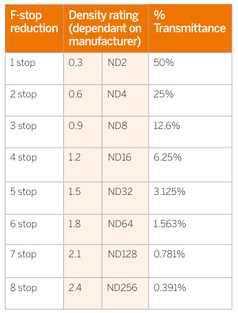
Making sense of the numbers on ND filters

Confusingly, different ND filter manufacturers use different scales to denote optical density. You can use the table below, (created by Digital Camera World) to ensure you get the right filter for your needs.

Picture
Well that's about it for this week. Please don't hesitate to contact me if you have any additional questions with respect to selecting and using ND filters. 

In my post next week  I will discuss how and when to use Graduated ND filters.  Thanks for visiting and lets get out there and capture some great images. Till next time "Keep your eyes open and your lenses dry.  Good Shooting Everybody".
0 Comments

    Popular Quick Links

    Canadian Geographic
    Nature Conservancy
    British Columbia Magazine
    Outdoor Photography Canada
    Blackfish Studio
    Digital Photography Review
    The-Digital-Picture.com

    Archives

    June 2016
    April 2016
    March 2016
    September 2015
    May 2015
    April 2015
    February 2015
    October 2014
    May 2014

    Blog Links:

    All
    Favorite Places
    Photo Adventures
    Photo Gear
    Pictures

    Categories

    All
    Favorite Places
    Photo Adventures
    Photo Gear
    Pictures

© 2013  Ken Lozoway - All Rights Reserved
Contact / About / Blog