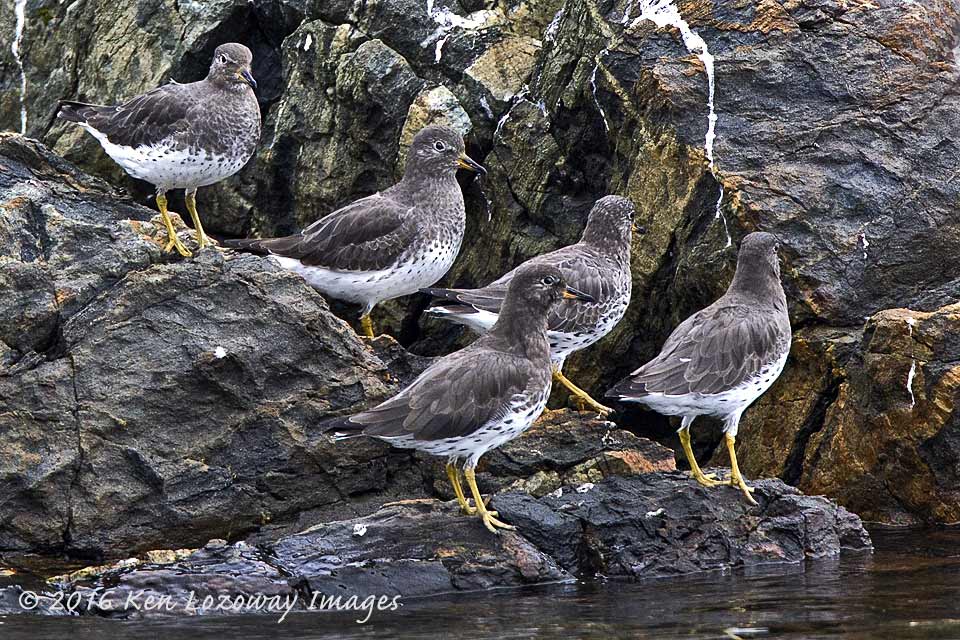
My interest in observing and photographing shorebirds is two fold: first living on Vancouver Island I have relatively easy access to both coastal and inland habitats. Secondly many of the locations are located within the Pacific Flyway for migratory birds. Additionally I have always been interested in animal behaviour, and shorebirds provide many unique opportunities to observe and photograph social behaviors under breeding and non-breeding conditions.
Furthermore Shorebirds represent excellent subjects because some species are resident and sedentary year round, while others undertake phenomenal migrations each year. The ecology of many species also includes using several different types of habitats throughout the year, including high mountain areas, swamps, muddy, rocky or sandy seacoasts. This wide geographic and ecological scope also results in a great diversity of social systems and behaviours (see Miller 1984, Communication in Breeding Shorebirds pg 169-241).
Furthermore Shorebirds represent excellent subjects because some species are resident and sedentary year round, while others undertake phenomenal migrations each year. The ecology of many species also includes using several different types of habitats throughout the year, including high mountain areas, swamps, muddy, rocky or sandy seacoasts. This wide geographic and ecological scope also results in a great diversity of social systems and behaviours (see Miller 1984, Communication in Breeding Shorebirds pg 169-241).
Shorelines and edges of lakes, rivers, marshes, beaches, mudflats and coastal rocky intertidal zones can be very productive birding areas fore shorebirds and waders. These birds vary widely in size, shape and color and include species such as plovers, sandpipers, egrets, herons, ibises, cranes, flamingos, bitterns and spoonbills amongst others.
A majority of my encounters with shorebirds have occurred on the pacific west coast of Canada & the US. Generally many shorebirds spend considerable periods of time foraging within 4-10ft (?-2m) of the high-tide line along rocky intertidal shores. As with most ecological transition zones, these areas tend to have higher biodiversity and biomass than either the upland or shallow littoral areas along shorelines. Considering the importance of conserving their energy, particularly on long migrations, it’s not surprising these areas are so often frequented by shorebirds. My observations suggest this also holds true for shorebirds commonly found in freshwater and wetland habitats.
A majority of my encounters with shorebirds have occurred on the pacific west coast of Canada & the US. Generally many shorebirds spend considerable periods of time foraging within 4-10ft (?-2m) of the high-tide line along rocky intertidal shores. As with most ecological transition zones, these areas tend to have higher biodiversity and biomass than either the upland or shallow littoral areas along shorelines. Considering the importance of conserving their energy, particularly on long migrations, it’s not surprising these areas are so often frequented by shorebirds. My observations suggest this also holds true for shorebirds commonly found in freshwater and wetland habitats.
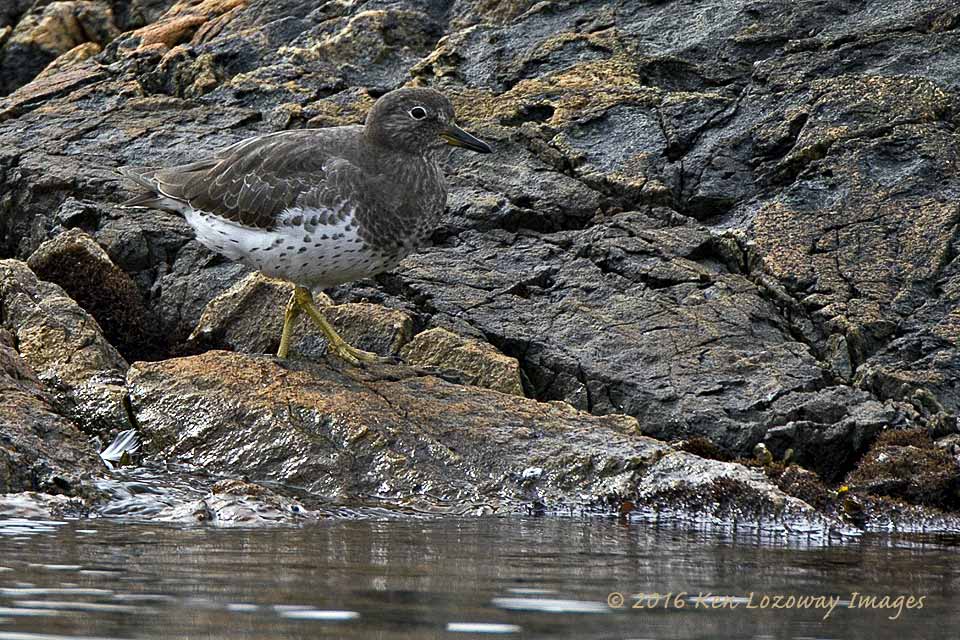
Surfbird
Order: Charadiformes
Family: Scolopacidae
Species: Aphriza virgate
A bird with a dual lifestyle, the chunky, stubby-billed Surfbird breeds in the high mountain tundra of Alaska and the Yukon, and then migrates to the rocky Pacific coasts of both North and South America. Some individuals have been reported to migrate as far as southern Chile, a round trip of over 19,000 miles (30,500km) each year. This extremely large migratory range is amongst the largest of all North American shorebirds. With the exception of breeding seasons, Surfbirds spend a majority of their lives along rocky intertidal shores.
Order: Charadiformes
Family: Scolopacidae
Species: Aphriza virgate
A bird with a dual lifestyle, the chunky, stubby-billed Surfbird breeds in the high mountain tundra of Alaska and the Yukon, and then migrates to the rocky Pacific coasts of both North and South America. Some individuals have been reported to migrate as far as southern Chile, a round trip of over 19,000 miles (30,500km) each year. This extremely large migratory range is amongst the largest of all North American shorebirds. With the exception of breeding seasons, Surfbirds spend a majority of their lives along rocky intertidal shores.
VOICE: Flight call is a soft whiff-if-fi; feeding flocks soft, chattering whik; display call is a kree, kree … ki-drr ki-drr, and quoy quoy quoy.
FLIGHT: Flight is swift and direct, with strong, powerful wing beats.
NESTING: Shallow lined depressions on vegetated or bare ground; 4 eggs; 1 brood; MAY-JUNE.
FEEDING: Eat mainly insects, especially beetles; also aquatic mollusks and crustaceans, such as mussels and barnacles.
OCCURRENCE: Except when breeding, Surfbirds spend their lives along rocky intertidal shores. Breeds in low to high-elevation steep, rocky slopes of ridges and mountains; the rest of the year is spent exclusively on rocky Pacific coastlines, typically within 6-1/2ft (2m) of the high tide line. This is the narrowest range of all North American shorebirds.
FLIGHT: Flight is swift and direct, with strong, powerful wing beats.
NESTING: Shallow lined depressions on vegetated or bare ground; 4 eggs; 1 brood; MAY-JUNE.
FEEDING: Eat mainly insects, especially beetles; also aquatic mollusks and crustaceans, such as mussels and barnacles.
OCCURRENCE: Except when breeding, Surfbirds spend their lives along rocky intertidal shores. Breeds in low to high-elevation steep, rocky slopes of ridges and mountains; the rest of the year is spent exclusively on rocky Pacific coastlines, typically within 6-1/2ft (2m) of the high tide line. This is the narrowest range of all North American shorebirds.
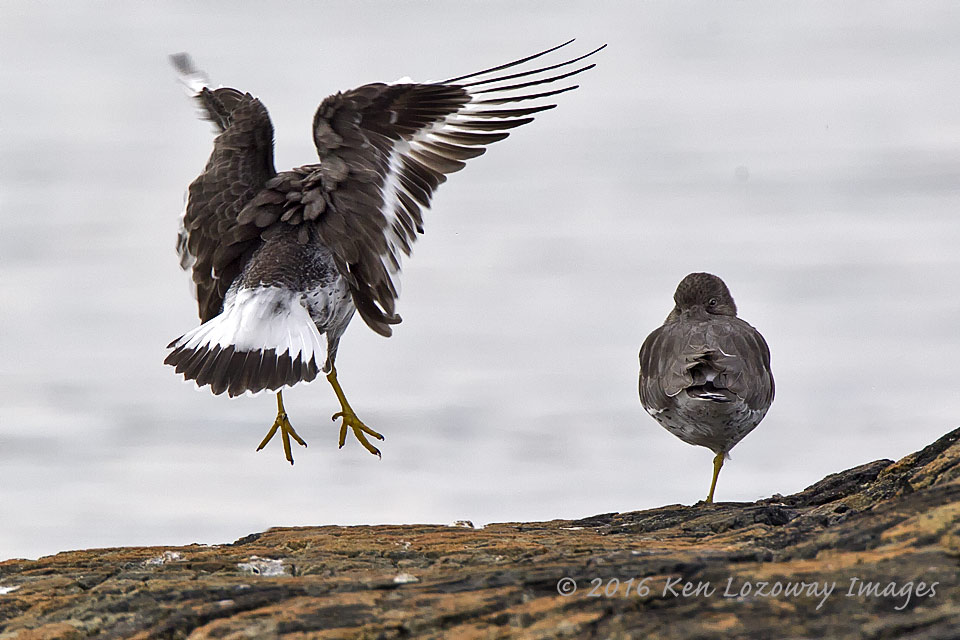
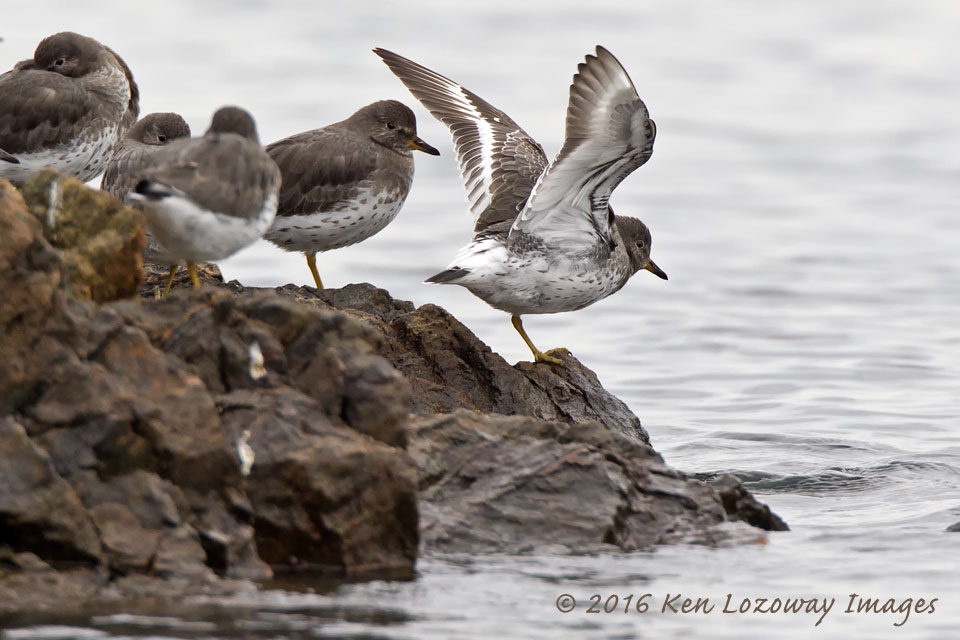
The two images below illustrate territorial behavior between a group of Surfbirds and an intruding Black Turnstone.
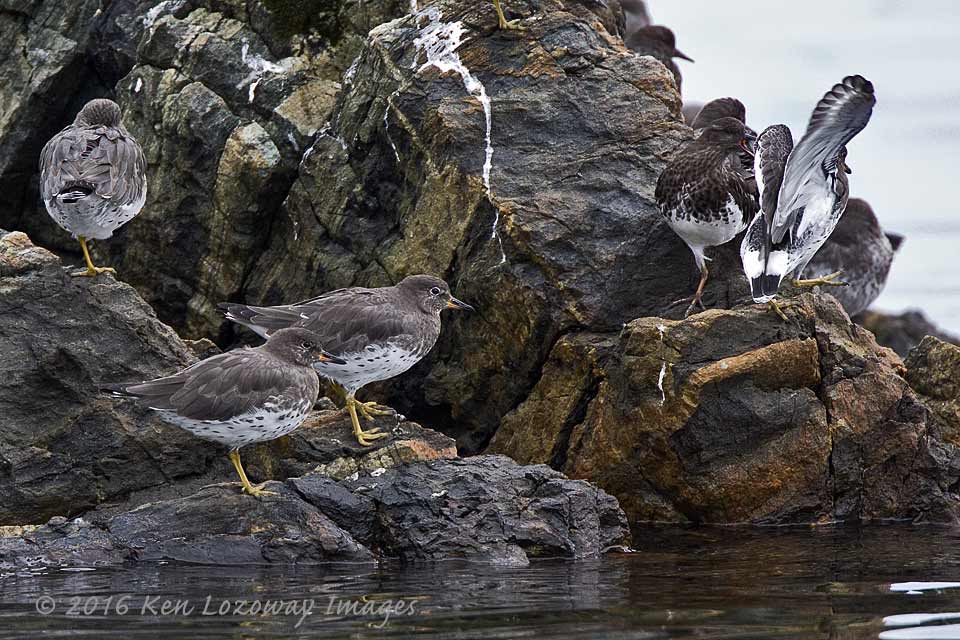
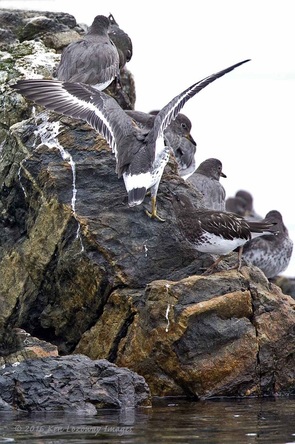
(Taken from Birds of Canada-David M Bird, Ph.D. First Edition 2010)
NOTE: I hope you enjoyed and found this post interesting and informative. Please leave your feedback comments, as I would like to make posts one of this type a regular feature on the web site. Thank you.
NOTE: I hope you enjoyed and found this post interesting and informative. Please leave your feedback comments, as I would like to make posts one of this type a regular feature on the web site. Thank you.